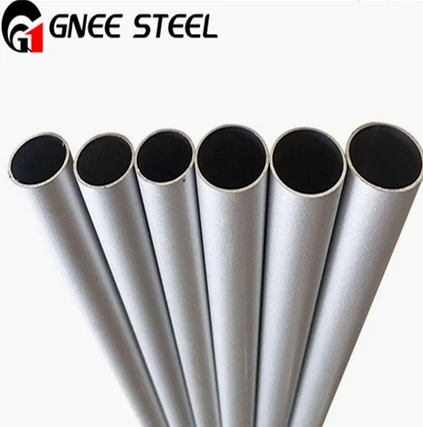
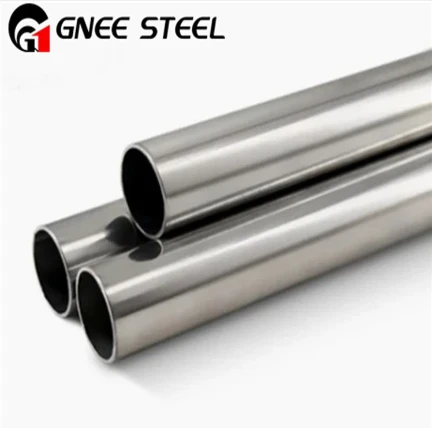
1. What does "Spot Goods NR. 1.4958" specifically refer to, and why is it significant for a buyer seeking Incoloy 800HT pipe?
This designation combines two crucial pieces of information for a procurement specialist or engineer.
"Spot Goods" means the material is in stock and available for immediate or near-term shipment. This is critical for maintenance, repair, and operations (MRO) activities or urgent project needs where lead times for mill-ordered materials (often 20+ weeks) are unacceptable.
"NR. 1.4958" is the German material number (Werkstoffnummer) for Incoloy 800HT. It is the direct equivalent to UNS N08811 and is widely recognized in European and international standards (e.g., DIN 2.4851). Specifying this number ensures precise identification, eliminating confusion with the similar grades Incoloy 800 (1.4876) or 800H (1.4959).
Therefore, "Spot Goods NR. 1.4958" explicitly identifies readily available, high-temperature pipe stock in the exact, top-performing Incoloy 800HT grade, guaranteeing the correct chemistry (controlled high carbon and Al+Ti) and mandated coarse grain structure.
2. For heat treatment equipment, what specific properties make Incoloy 800HT pipe superior to standard heat-resistant stainless steels?
Heat treatment furnaces (e.g., for annealing, carburizing, nitriding) create some of the most aggressive high-temperature environments. Incoloy 800HT pipe excels here due to its balanced composition:
Exceptional Creep & Rupture Strength: The primary reason for choosing 800HT over standard steels like 304H or 309S. Its high carbon and stabilization allow it to withstand internal pressure and its own weight at temperatures above 600°C for decades without significant deformation or failure.
Outstanding Resistance to Carburization: In carburizing atmospheres (rich in CO), ordinary steels can suffer from "metal dusting" – a catastrophic form of corrosion where the metal breaks into powder. 800HT forms a stable, protective chromia scale that drastically slows carbon ingress, preserving ductility and strength.
Cyclic Oxidation Resistance: The alloy's high chromium content forms a tenacious oxide layer that resists spalling during repeated heating and cooling cycles in furnace atmospheres, protecting the base metal.
Good Resistance to Nitriding: While not immune, it performs significantly better than many steels in nitriding atmospheres, retaining more toughness.
Using 800HT pipe for radiant tubes, retorts, fans, and charge baskets directly translates to longer service life, reduced furnace downtime, and higher process reliability.
3. What are the key certification and testing requirements for "Spot Goods" NR. 1.4958/800HT pipe intended for high-temperature pressure applications?
Even for stock material, proper certification is non-negotiable for safety and performance. Key documents and tests include:
Mill Test Certificate (MTC) / 3.1 Certificate: Must conform to EN 10204. It verifies heat (melt) analysis against the NR. 1.4958 specification (C: 0.06-0.10%, Cr: 19-23%, Ni: 30-35%, Al+Ti ≥ 0.85%, etc.).
Grain Size Report: A metallographic test report confirming an ASTM No. 5 or coarser grain size (as per ASTM B409) is essential. This is the defining feature of properly annealed 800H/HT and is critical for creep life.
Solution Annealing Certification: Proof that the pipe was annealed at a temperature ≥ 1100°C and water quenched or rapidly cooled.
Hydrostatic or Non-Destructive Testing (NDT): For pressure pipe, proof of hydrostatic testing or eddy current/ultrasonic testing to ensure pressure integrity and absence of defects.
A reputable supplier of "Spot Goods" should provide these certifications immediately, confirming the material is not just "in stock," but also fully qualified.
4. What fabrication precautions are especially important when welding or bending Incoloy 800HT pipe from stock for furnace retrofit?
Fabricating stock pipe requires care to preserve its high-temperature properties:
Welding: Use a matching or over-matched filler metal such as ERNiCr-3 (for general use) or a higher aluminum/titanium grade like ERNiCrCoMo-1 for the most demanding cyclic conditions. Employ low heat input techniques (e.g., TIG) to minimize excessive grain growth in the Heat-Affected Zone (HAZ). Post-weld heat treatment is typically not required but is recommended for severe service to relieve stresses.
Cold Bending: Due to its rapid work-hardening rate, bending requires powerful equipment. The minimum bend radius is larger than for carbon steel. For tight bends, hot bending or annealing after bending may be necessary.
Cutting & Machining: Use sharp, hard tooling and positive rake angles. The alloy is tough and generates significant heat during machining, so ample cooling/lubrication is required.
The advantage of using certified stock pipe is that the base material properties are guaranteed, allowing the fabricator to focus on controlling the fabrication process itself.
5. In an economic evaluation, when does opting for "Spot Goods" 800HT pipe become the most cost-effective choice compared to ordering new production?
The decision involves a Total Cost of Ownership (TCO) analysis, where "Spot Goods" can offer decisive savings:
Scenario 1: Emergency Downtime: When a radiant tube or critical piping fails, furnace production stops. The cost of lost production (tons per day) often dwarfs any premium paid for immediately available "Spot Goods." The ability to procure, fabricate, and install within days versus months is invaluable.
Scenario 2: Small Volume Projects: For a small retrofit or a pilot plant, the minimum order quantity (MOQ) from a mill may be prohibitive. Stock suppliers offer the exact required meterage.
Scenario 3: Lifecycle Costing: While the upfront cost per meter of spot pipe may be higher than a mill order, it eliminates the carrying costs of capital tied up in inventory for months and the risk of project delays. For maintenance, having a reliable source of spot material reduces the need for large, costly in-house inventories.
Thus, "Spot Goods NR. 1.4958" is not just a convenience; it is a strategic procurement solution that minimizes risk and total cost for urgent, critical, or small-volume applications in heat treatment and other high-temperature industries.