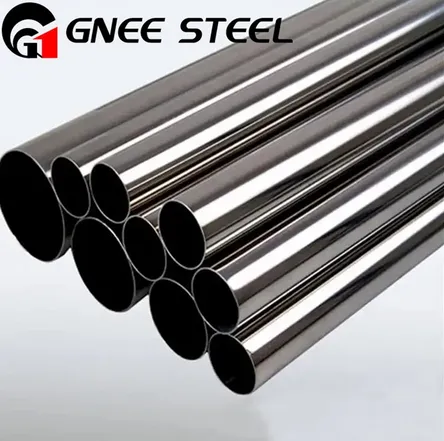
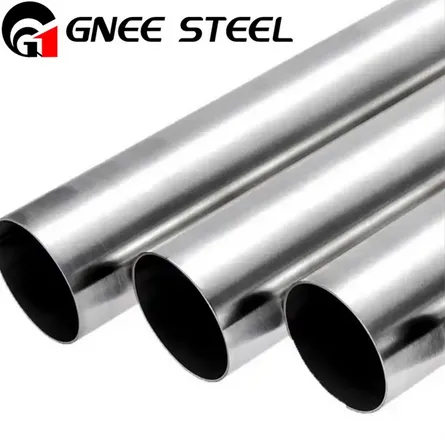
Nickel 200 and Nickel 201 are closely related pure nickel alloys, often grouped together due to their high nickel content, but they differ primarily in carbon content, which impacts their performance in specific environments-particularly high-temperature applications. Below is a detailed comparison:
The key distinction lies in their carbon content, with minor differences in other trace elements:
| Element |
Nickel 200 (UNS N02200) |
Nickel 201 (UNS N02201) |
| Nickel (Ni) |
≥99.0% (minimum) |
≥99.0% (minimum) |
| Carbon (C) |
≤0.15% (maximum) |
≤0.02% (maximum) |
| Iron (Fe) |
≤0.40% (maximum) |
≤0.40% (maximum) |
| Copper (Cu) |
≤0.25% (maximum) |
≤0.25% (maximum) |
| Manganese (Mn) |
≤0.35% (maximum) |
≤0.35% (maximum) |
| Silicon (Si) |
≤0.35% (maximum) |
≤0.35% (maximum) |
| Sulfur (S) |
≤0.01% (maximum) |
≤0.01% (maximum) |
Nickel 200: Contains up to 0.15% carbon, making it slightly less pure in terms of carbon content.
Nickel 201: A "low-carbon" variant, with carbon strictly limited to 0.02% or less. This intentional reduction in carbon is its defining feature.
At room temperature, their mechanical properties are nearly identical because the low carbon levels in both alloys have minimal impact on strength or ductility in ambient conditions:
| Property |
Nickel 200 (Annealed) |
Nickel 201 (Annealed) |
| Tensile Strength |
310–550 MPa (45–80 ksi) |
310–550 MPa (45–80 ksi) |
| Yield Strength (0.2% offset) |
103–276 MPa (15–40 ksi) |
103–276 MPa (15–40 ksi) |
| Elongation (in 50 mm) |
40–50% |
40–50% |
| Hardness (Brinell) |
50–80 HB |
50–80 HB |
The critical difference emerges at elevated temperatures, where carbon content affects "graphitization" (a form of degradation) and mechanical stability.
The most significant distinction between the two alloys is their behavior under high-temperature, reducing atmospheres (e.g., hydrogen-rich environments):
Nickel 200: Its higher carbon content (up to 0.15%) makes it susceptible to graphitization at temperatures above ~315°C (600°F) in reducing environments. Graphitization occurs when carbon in the alloy reacts with hydrogen to form methane (CH₄) gas, creating voids and weakening the material's structure over time. This can lead to embrittlement, cracking, or failure in high-temperature service.
Nickel 201: With its ultra-low carbon content (≤0.02%), it resists graphitization even at temperatures up to ~650°C (1200°F) in reducing atmospheres. This makes it far more stable for long-term use in high-temperature, hydrogen-rich applications (e.g., chemical processing with hydrogen gas, heat treat furnaces).
Both alloys offer excellent corrosion resistance in many environments, including:
Alkaline solutions (e.g., caustic soda, sodium hydroxide).
Organic acids and solvents.
Freshwater, seawater, and atmospheric conditions.
However, Nickel 201's lower carbon content provides a slight advantage in high-purity or ultra-clean environments (e.g., pharmaceutical equipment, food processing), where even trace carbon could contaminate processes.
ASTM Standards:
Both alloys are covered by identical ASTM standards, including:
ASTM B162 (plates, sheets, strips).
ASTM B163 (seamless pipes and tubes).
ASTM B165 (welded pipes and tubes).
ASTM B564 (forged fittings).
6.Applications:
Nickel 200: Preferred for ambient or moderate-temperature applications where high-temperature graphitization is not a risk, such as:
Alkaline battery casings.
Chemical storage tanks (for non-high-temperature services).
Electrical components (e.g., conductors, vacuum tubes).
Marine hardware.
Nickel 201: Used in high-temperature, reducing environments or ultra-pure settings, including:
Hydrogen processing equipment (e.g., reformers, hydrogenation reactors).
Heat exchangers in petrochemical plants.
High-purity water systems (e.g., nuclear power).
Pharmaceutical and food processing machinery (to avoid carbon contamination).
The core difference between Nickel 200 and Nickel 201 is their carbon content: Nickel 200 has up to 0.15% carbon, while Nickel 201 is restricted to ≤0.02% carbon. This makes Nickel 201 far more resistant to high-temperature graphitization in reducing environments, while Nickel 200 is suitable for ambient or moderate-temperature applications where cost (slightly lower for Nickel 200) or general corrosion resistance is prioritized over high-temperature stability.