


For purchasing managers and thermal designers, choosing between GH4169 (an equivalent of Inconel 718) and GH3039 requires striking a delicate balance between mechanical properties and environmental durability.
The pain point: We often see projects fail because engineers chose GH4169 for its high strength, but it rapidly ages and softens in the high-temperature furnace environment of 850°C. Conversely, using the more oxidation-resistant GH3039 for high-speed rotating shafts can lead to premature fatigue failure.
At Gnee Steel, we help you solve this problem. Understanding the metallurgical differences between GH4169 and GH3039 is crucial for ensuring the industrial durability of critical components.
Contact our professionals to recommend the right alloy for your project
Difference between GH4169 and GH3039 seamless steel pipes

Difference between GH4169 and GH3039 seamless steel pipes
GH4169 and GH3039 are both high-temperature nickel-based alloy seamless steel tubes, widely used in aerospace and industrial fields, but they differ significantly in strengthening mechanisms, operating temperatures, and specific applications. GH4169 is a high-strength precipitation-strengthened alloy (similar to Inconel 718), while GH3039 is a solid solution-strengthened alloy with excellent oxidation resistance and thermal stability.
What is GH3039 material?
GH3039 is a single-phase austenitic solid solution strengthened nickel-based alloy. Due to its excellent high-temperature strength, thermal fatigue resistance, and corrosion resistance at 850℃, it is the mainstream material for thermocouple protection tubes.

Key information about GH4169 and GH3039

GH4169: The High-Load Fatigue Expert
GH4169 is a precipitation-hardening superalloy, primarily strengthened by the γ′′ (γ′) phase. It is the undisputed king of mechanical strength in the temperature range of 600°C to 700°C.
Key Advantages: Excellent yield strength (≥ 1030 MPa) and exceptionally long fatigue life.
Optimal Applications: Rotating components, engine shafts, high-pressure fuel lines, and fasteners.
Limitations: Strength begins to decline rapidly above 700°C.



GH3039: Excellent Oxidation Resistance
GH3039 is a single-phase austenitic alloy, achieved through solid solution strengthening (molybdenum) and precipitation strengthening (aluminum/titanium). It prioritizes thermal stability over raw strength.
Key Advantages: Excellent oxidation stability and resistance to thermal fatigue up to 800°C (1472°F).
Best applications: High-temperature heat exchangers, combustion chamber linings, furnace baffles, and static structural ducts.
Limitations: Its yield strength is significantly lower than GH4169 at all temperatures.


3. GH4169 vs GH3039 Technical Comparison Table
| Feature | GH4169 (Nickel Alloy 718) | GH3039 (Nickel Alloy 3039) |
| Strengthening Element | Niobium (Nb) | Molybdenum (Mo) & Aluminum (Al) |
| Max Service Temp (Load) | 700°C (1292°F) | 800°C (1472°F) |
| Oxidation Resistance | Good (Up to 980°C static) | Superior (Highly Stable at 800°C+) |
| Yield Strength at 650°C | ≥ 850 MPa | ~ 200 MPa |
| Fabrication Ease | Challenging (Requires Aging) | Excellent (Superior Weldability) |
| Primary Industrial Role | Dynamic / High-Pressure Service | Static / High-Temp Oxidation Service |
4. Chemical composition (wt%) of GH4169 and GH3039
| Element | GH4169 | GH3039 | Key Difference |
|---|---|---|---|
| Nickel (Ni) | 50.0 – 55.0 | Balance (≥ 65.0) | GH3039 has higher Ni content |
| Chromium (Cr) | 17.0 – 21.0 | 19.0 – 22.0 | Similar |
| Iron (Fe) | Balance (~18-20%) | ≤ 3.0 | GH4169 has much higher Fe |
| Molybdenum (Mo) | 2.80 – 3.30 | 1.80 – 2.30 | GH4169 slightly higher |
| Niobium (Nb) | 4.75 – 5.50 | 0.90 – 1.30 | GH4169 has much higher Nb |
| Titanium (Ti) | 0.65 – 1.15 | 0.35 – 0.75 | GH4169 higher |
| Aluminum (Al) | 0.20 – 0.80 | 0.35 – 0.75 | Similar |
| Cobalt (Co) | ≤ 1.00 | – | GH4169 may contain trace Co |
| Carbon (C) | ≤ 0.08 | ≤ 0.08 | Same |
| Manganese (Mn) | ≤ 0.35 | ≤ 0.40 | Similar |
| Silicon (Si) | ≤ 0.35 | ≤ 0.80 | GH4169 lower |
| Phosphorus (P) | ≤ 0.015 | ≤ 0.020 | GH4169 stricter |
| Sulfur (S) | ≤ 0.015 | ≤ 0.012 | Similar |
| Boron (B) | ≤ 0.006 | – | GH4169 unique |
| Copper (Cu) | ≤ 0.30 | ≤ 0.20 | Similar |
5. Room temperature mechanical properties of GH4169 and GH3039
| Property | GH4169 (Aged) | GH3039 (Solution Treated) | Advantage |
|---|---|---|---|
| Tensile Strength, Ultimate | ≥ 1275 MPa | ≥ 735 MPa | GH4169 (~75% higher) |
| Tensile Strength, Yield (0.2% Offset) | ≥ 1035 MPa | Not specified* | GH4169 much higher |
| Elongation at Break | ≥ 12% | ≥ 40% | GH3039 (much more ductile) |
| Reduction of Area | ≥ 15% | – | – |
| Hardness | 35 – 40 HRC | – | GH4169 much harder |
| Modulus of Elasticity | ~200 GPa | ~196 GPa | Similar |
| Density | 8.19 g/cm³ | 8.3 g/cm³ | GH4169 slightly lighter |
Click to download the GH4169 alloy PDF file now
4. How to Choose Between GH4169 and GH3039?
If your piping system is part of a high-speed rotating component that needs to withstand extremely high internal pressures, or serves as a structural shaft, and structural integrity and fatigue resistance are primary considerations, then choose GH4169 seamless steel pipe.
If you are manufacturing heat exchangers or furnace internals, and the material needs to withstand continuous high temperatures up to 800°C, but with minimal mechanical loads, then choose GH3039 seamless steel pipe. It offers the most cost-effective solution in terms of heat resistance and oxidation resistance.
Contact us to recommend the most suitable alloy for your needs
Why choose Gnee Steel manufacturer?
Whether your project demands the strength of GH4169 or the stability of GH3039, we ensure Quality Assurance through:
✅️VIM + VAR melting: Ultra-clean materials to maximize the life cycle of both alloys.
✅️MTC 3.1 Traceability: Full heat analysis and mechanical testing reports (EN 10204 3.1) included.
✅️Wholesale Inventory: Large stock of standard schedules (Sch 40, Sch 80) ready for Fast Global Shipping.
✅️Custom Fabrication: We provide precision cutting, centerless grinding, and bending services for both grades.

Gnee Steel GH4169 Certificate
📦 Packaging and Shipping
All Nickel Based Alloy products are packaged using the following methods:
Wooden pallets or crates
Moisture-proof packaging
Labels with furnace number, standard, and size labels
Shipped worldwide by sea, air, or express
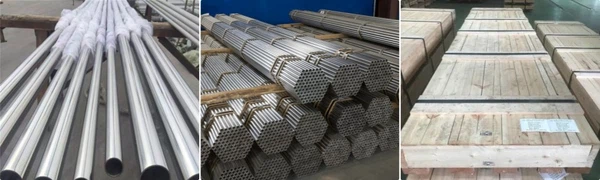
Gnee Steel GH4169 Product Packing
Contact us for the latest export price quote for GH4169 Alloy
FAQ
Q1: Can I weld GH4169 and GH3039 together?
A: Yes. They have good metallurgical compatibility. We recommend using ERNiCr-3 filler metal. However, please note that the maximum operating temperature of the entire joint will be limited by the weaker alloy (GH3039).
Q2: Is GH3039 equivalent to any international grade?
A: GH3039 is a specialized alloy often used as a more stable alternative to 310S stainless steel. It is chemically similar to some Nimonic series alloys but optimized for Industrial Durability in specific furnace applications.
Q3: Why is GH4169 more expensive for tubing?
A: GH4169 contains high levels of Niobium (Nb) and requires complex vacuum melting and multi-stage heat treatment (Aging) to reach its performance specs.
Q4: Do you provide NDT testing for both types of pipes?
A: Absolutely. All our seamless GH4169 and GH3039 tubes undergo 100% Ultrasonic (UT) and Eddy Current (ET) testing to ensure Zero Defect quality.



