


Are your high-temperature components experiencing material failure or embrittlement? While standard 310S stainless steel and even some Inconel grades are common choices, they often perform poorly under cyclic heating and oxidizing atmospheres.
Gnee Steel, a highly regarded supplier of specialty high-temperature alloys, offers high-performance Nimonic 75 (Alloy 75/GH3030) round bars with significant competitive advantages in durability, structural stability, and long-term return on investment.
🧪 Requesting Nimonic 75 samples for analysis
Comparison of Nimonic 75 round bars with stainless steel 310S and Inconel 600 alloys

Comparison of Nimonic 75 round bars with stainless steel 310S and Inconel 600 alloys
Nimonic 75, 310S stainless steel, and Inconel 600 are all high-performance alloys used in high-temperature environments, but they differ significantly in composition, strength, and specialized applications. Nimonic 75 is an 80/20 nickel-chromium alloy, known for its good oxidation resistance and moderate strength, and is commonly used in the aerospace industry. Inconel 600 is a high-nickel alloy (approximately 76% nickel content) with excellent corrosion resistance and high-temperature strength. 310S stainless steel is a heat-resistant austenitic stainless steel (iron-based) containing 25% chromium and 20% nickel, and is a more cost-effective oxidation-resistant alloy option.
What is NIMONIC 75 material?
NIMONIC 75 alloy is an 80/20 nickel-chromium alloy with added titanium and carbon. This alloy was originally introduced in the 1940s for the manufacture of turbine blades. It is easy to machine and weld, and possesses good corrosion resistance, mechanical properties, and heat resistance.

1. Comparison of key components of NIMONIC 75, stainless steel 310S, and Inconel 600
| Feature | Nimonic 75 | Inconel 600 | Stainless Steel 310S |
|---|---|---|---|
| Base Metal | Nickel (80%) | Nickel (~76%) | Iron (~54%) |
| Chromium | ~20% | 15.5% - 17% | 24% - 26% |
| Main Strength | High-temp creep/oxidation resistance | Excellent oxidation & corrosion resistance | High-temp oxidation resistance & Cost-effective |
| Max Temp (Air) | ~1100°C (Oxidation) | ~1050°C | ~1100°C |
| Tensile Str. | Moderate (~750 MPa) | High (~655+ MPa) | Moderate (~515-655 MPa) |
| Cost | High | Very High | Moderate |
| Workability | Good | Moderate (Difficult) | Good (Easier) |
Detailed analysis of NIMONIC 75, 310S stainless steel and Inconel 600

1. Nimonic 75 Round Bars (Ni-Cr alloy)
Optimal Application Environment: Resistant to high-temperature oxidation and scaling, moderate strength.
Characteristics: This is a solid solution strengthened alloy with controllable carbon and titanium content. Commonly used in plates, it can also be made into bars for gas turbines. Easy to machine and weld.
Applications: Combustion chambers, turbine blades, industrial furnace components, and nuclear engineering.


2. Inconel 600 Round Bar (High-Nickel Alloy)
Optimal Application Environment: Resistant to high-temperature oxidation and corrosion, suitable for corrosive environments (acids, sulfides).
Characteristics: Better strength retention than Nimonic 75 in harsh chemical or marine environments. While more difficult to machine than 310S, it offers higher strength at high temperatures.
Applications: Furnace components (muffle furnaces, distillation kettles), chemical processing (evaporation tubes), and nuclear reactors.


3. 310S Stainless Steel Round Bar (Heat-Resistant Steel)
Optimal Application Environment: Suitable for environments with low oxidizing properties, reaching temperatures up to 1100°C. Economical, efficient, and high-strength.
Properties: More economical than Nimonic and Inconel nickel alloys due to its iron-based rather than nickel-based composition, but experiences faster strength loss at extreme temperatures. In some cases, it exhibits better resistance to sulfur-containing gases than Inconel 600.
Applications: Furnace components, burners, combustion chambers, and heat treatment baskets.


2. Nimonic 75 vs. 310S Stainless Steel and Inconel 600 Benefits Comparison
Engineers often face the dilemma of choosing between cost and lifespan. Here are the reasons why Nimonic 75 is a smarter investment for applications in the 800°C to 1000°C range:
| Feature | Nimonic 75 (Alloy 75) | 310S Stainless Steel | Inconel 600 (Alloy 600) |
| Structural Stability | Exceptional (No Sigma Phase) | Prone to embrittlement | Good stability |
| Oxidation Resistance | Best-in-Class (Ti-Stabilized) | Moderate (Scales at high temp) | Excellent |
| Ductility (Formability) | Remains high after heating | Drops significantly | Maintains well |
| Thermal Fatigue Life | Extended (Ideal for cycling) | Short | Moderate to High |
| ROI / Service Life | Highest (Low maintenance) | Low (Frequent replacement) | High |
Advantages of Gnee Steel Nimonic 75 Bars
As a leading nickel alloy manufacturer, Gnee Steel ensures that every Nimonic 75 round bar meets the highest industry standards:
Smelting Quality: Utilizing vacuum induction melting (VIM) + electroslag remelting (ESR) processes, we achieve ultra-low impurity content.
Dimensional Accuracy: Precision peeling or centerless grinding surface treatments with tolerances up to h9 or h10.
Full Traceability: Accompanied by a Material Testing Certificate (MTC) conforming to EN 10204 3.1, including documentation verifying chemical and mechanical properties.
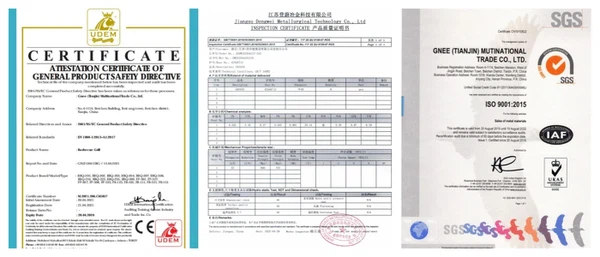
Gnee Steel GH3030 Certificate
📦 Packaging and Shipping
All Nickel Based Alloy products are packaged using the following methods:
Wooden pallets or crates
Moisture-proof packaging
Labels with furnace number, standard, and size labels
Shipped worldwide by sea, air, or express
Contact us for the latest export price quote for GH3030 Alloy
FAQ
Q1: Why is Nimonic 75 considered more "cost-effective" than stainless steel in the long run?
A: While the initial cost per kg of Nimonic 75 is higher than 310S, its service life is often 3-5 times longer. This reduces replacement labor, shipping costs, and most importantly, expensive production shutdowns.
Q2: How does Nimonic 75 perform in sulfur-rich atmospheres?
A: Nimonic 75 is optimized for oxidation resistance in air. For reducing atmospheres containing sulfur, we recommend consulting our technical team as nickel-based alloys require specific environmental considerations.
Q3: Can you provide GH3030 equivalent bars for the Asian market?
A: Yes. We are a global exporter and our GH3030 bars are chemically identical to Nimonic 75, meeting all GB/T, ASTM, and BS standards simultaneously.
Q4: Do you offer custom diameters for precision machining?
A: Absolutely. We provide custom-sized Nimonic rods to minimize your machining waste. We can supply diameters from 8.0mm to 450mm with rapid turnaround times.



