


Choosing Between Inconel 600 vs 601 Alloy
Choosing Between Inconel 600 vs 601 Alloy
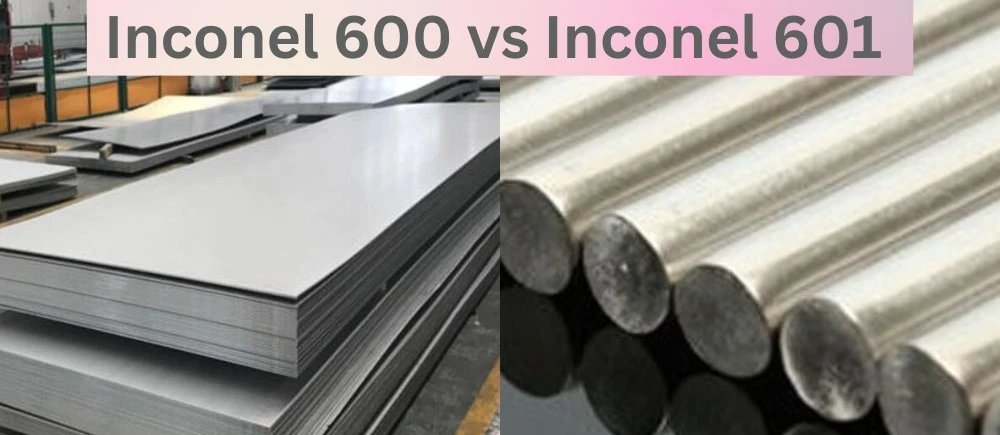
Due to the addition of aluminum, Inconel 601 generally outperforms Inconel 600 in terms of high-temperature oxidation resistance, carburization resistance, and thermal fatigue resistance. Inconel 600 performs well in general corrosion resistance, especially in resistance to chloride stress cracking, and is generally less expensive and more readily available, making it suitable for medium- and high-temperature applications.
Are Nickel Alloy 600 and Inconel 600 the same alloy?
Nickel Alloy 600, also sold under the brand name Inconel 600, is a unique nickel-chromium alloy known for its oxidation resistance at high temperatures. It has a wide range of applications, from low temperatures to high-temperature applications up to 2000°F (1093°C).

Standard of Inconel 600 & 601 Alloy
| Pipe Smls | Pipe Welded | Tube Smls | Tube Welded | Sheet/Plate | Bar | Forging | Fitting | Wire |
| B167 | B517 | B163 | B516 | B168 | B166 | B564 | B366 | - |
| B167 | B517 | B163 | - | B168 | B166 | B564 | B366 | B166 |
Inconel 601 and 600 alloy chemical composition percentages
| Grade | Ni | Cr | Fe | C | Mn | S | Si | Cu |
| Inconel 600 | 72.0 min | 14.0 – 17.0 | 6.0 – 10.0 | 0.15 max | 1.0 max | 0.015 max | 0.5 max | 0.5 max |
| Grade | Ni | Cr | Al | C | Mn | Si | Fe | Cu |
| Inconel 601 | 58-63 | 21-25 | 1-1.7 | 0.10 max | 1.5 max | 0.015 max | 0.5 max | 1.0 max |
Mechanical properties of Inconel 601 and 600 alloys
| UNS Designation | Tensile Strength, min | Yield Strength (0.2% offset), min | Elongation |
| psi(MPa) | psi(MPa) | % | |
| N06601 | 80000 (550) | 30000 (205) | 30 |
| UNS Designation | Tensile Strength, min | Yield Strength(0.2% offset), min | Elongation |
| psi(MPa) | psi(MPa) | % | |
| N06600 | 80000 (550) | 30000 (205) | 35 |
Inconel 600 vs Inconel 601: A Comparison Table
| Feature | Inconel 600 | Inconel 601 |
| Composition | Ni (≥72%), Cr (14-17%), Fe (6-10%) | Ni (58-63%), Cr (21-25%), Al (1.0-1.7%) |
| Max Operating Temp | Up to 1175°C | Up to 1250°C |
| Oxidation Resistance | Excellent | Superior, due to added aluminum |
| Corrosion Resistance | Outstanding in acids, salts, and heat | Superior in high-temperature oxidizing environments |
| Applications | Heat exchangers, carburizing atmospheres | Furnace components, petrochemical industries |
| Weldability | Good | Excellent, with high stability |
| Formability | Moderate | High |
| Cost | Slightly more economical | Slightly more expensive due to enhanced durability |
Why Choose Inconel 601?
Inconel 601 is renowned for its superior oxidation resistance, making it the alloy of choice for high-temperature environments. Its aluminum content forms a protective oxide layer on the surface, preventing performance degradation even after prolonged exposure to high temperatures. This makes Inconel 601 particularly important in the following applications:
Industrial Furnaces: Capable of withstanding extreme high-temperature conditions without compromising their integrity.
Heat Exchangers: Reliably maintain performance even under sustained high-temperature environments.
Power Generation Equipment: Ideal for turbines and exhaust systems in energy production facilities.
Choosing Between Inconel 600 and Inconel 601
In chemical or marine environments, if you require resistance to chloride stress corrosion cracking, choose Inconel 600. If you require superior oxidation resistance for high-temperature applications such as industrial furnaces, choose Inconel 601. The right choice depends on the specific requirements of your project.
Summary: A New Definition of Reliability
Whether you choose Inconel 600 or Inconel 601, both are reliable, high-performance alloys trusted by engineers and project managers worldwide.
Your final choice depends on:
a. Operating temperature range
b. Level of exposure to oxidants
c. Budget considerations
d. Specific industrial environment
Always partner with certified and experienced metal suppliers to ensure your chosen alloy fully meets the technical requirements and performance objectives of your project. Whether you are sourcing Inconel plates, bars, tubing, or custom engineered fittings, choosing a supplier who offers complete transparency is crucial-this includes providing Factory Test Certificates (MTC), quality inspection, and timely delivery.
At Gnee Steel, we are more than just one of many nickel-based alloy suppliers in China-we are your trusted partner, helping you build with peace of mind. With precise processes, rigorous quality assurance, and a deep understanding of industry needs, Gnee Steel provides durable, reliable metal products. Because every great building begins with a solid foundation-and a solid foundation begins with the right alloy.
Why Choose Gnee as Your Nickel-Based Alloy Supplier
✅ Over 18 years of export experience, products sold to more than 80 countries
✅ Certified by ISO, SGS, and BV
✅ Global inventory of Inconel, Hastelloy, Incoloy, and Monel alloy tubing, plates, and bars
✅ Custom processing services available – including cutting, polishing, CNC machining, and packaging
✅ Fast delivery within 7-15 days, supported by global logistics partners
📦 Packaging and Shipping
All stainless steel products are packaged using the following methods:
Wooden pallets or crates
Moisture-proof packaging
Labels with furnace number, standard, and size labels
Shipped worldwide by sea, air, or express

About Gnee Steel
Gnee Steel is a professional manufacturer of nickel-based alloys, including Nickel 201, Nickel 202, Hastelloy C-276, Hastelloy C-22, Hastelloy B, Hastelloy C-4, Inconel 600, Inconel 625, Inconel 718, Inconel X-750, Incoloy 800, Incoloy 800H/HT, Incoloy 825, Monel 400, Monel K500, and other high-temperature alloy materials. We specialize in the production and sales of alloy materials. Gnee Steel's products are widely used in aerospace, chemical, power generation, automotive, nuclear energy, and other fields, and we can provide customized alloy material solutions according to customer needs. For inquiries about alloy material prices or customized alloy material solutions, please feel free to contact us via email at ss@gneemetal.com for a quote.
Square Meters Built
Enterprise Employees
Years Experience
Partner countries
Contact us for the latest export price quote for Inconel 600 sheet metal
FAQ
Q: What are the differences between Inconel 625 and Inconel 601?
A: Inconel 601 has a melting point of 2467°F (1350°C), while Inconel 625 has a melting point of 2375°F (1310°C). At room temperature, Inconel 601 has a tensile strength ranging from 590 to 930 MPa, while Inconel 625 has a slightly higher tensile strength of 690 to 895 MPa.
Q: What are the differences between Inconel 625 and Inconel 600?
A: Inconel 625 is unaffected by chloride stress corrosion cracking and pitting, making it ideal for harsh marine applications. In terms of oxidation resistance, Inconel 625 is superior to Inconel 600 due to its higher chromium and molybdenum content, exhibiting better performance even at extreme temperatures.
Q: Will Inconel 600 rust?
A: It exhibits excellent resistance to high-purity water corrosion, and no signs of chloride stress corrosion cracking were detected in the reactor water system.
Q: How is the machinability of Inconel 601?
A: A notable characteristic of Inconel 601 alloy is its excellent resistance to high-temperature oxidation. This alloy also exhibits good water corrosion resistance, high mechanical strength, and is easy to form, machine, and weld.
Q: What is the difference between Inconel 601 and 602?
A: Inconel 601 excels in oxidation resistance and tensile strength, making it suitable for high-temperature applications. In comparison, Inconel 602 offers superior creep and sulfur resistance, making it ideal for reducing environments.
Q: What is the temperature range of Inconel 600?
A: The hot working temperature range for Inconel 600 is 1600 – 2250°F (870 – 1230°C). Heavy working requires temperatures between 1900 – 2250°F (1040 – 1230°C), while light working can be performed at temperatures as low as 1600°F (870°C).
Q: What is Inconel 601?
A: Inconel 601 is a nickel-chromium alloy with extremely high oxidation resistance below 2200°F (1200°C). The 601 alloy forms a tightly adhering oxide scale that resists spalling even under harsh thermal cycling conditions. This alloy has good high-temperature strength and maintains good ductility even after long-term use.



