


Can ASTM B446 replace AMS 5666 for subsea applications?

Can ASTM B446 replace AMS 5666 for subsea applications?
Yes, for subsea applications, ASTM B446 can generally serve as a substitute for AMS 5666, as both specifications cover the same base material: Alloy 625 (UNS N06625) in bar form. However, since they cater to different industries, you must carefully verify that the ASTM material meets the stringent physical property and testing requirements of your specific subsea project.
What is UNS N06625 alloy?
Inconel 625 alloy (UNS designation N06625) is a nickel-based superalloy characterized by high strength and high-temperature performance, while also exhibiting excellent corrosion and oxidation resistance.

1. AMS 5666 vs ASTM B446 Selection Overview
| Parameter | AMS 5666 | ASTM B446 |
|---|---|---|
| Specification Type | Aerospace Material Specification (Bar/Forgings/Fasteners) | General Industrial Standard (Bar/Rod/Forgings) |
| Material | Inconel 625 (UNS N06625) | Inconel 625 (UNS N06625) |
| Product Form | Bar, rod, wire, forgings, flanges, bolting | Bar, rod, wire, forgings (general) |
| Typical Applications | Aerospace fasteners, subsea O&G HPHT, wellhead components, sour service | Chemical processing, marine, oil & gas (non-critical), heat exchangers, general engineering |
| Grade / Condition | Condition A (Solution Annealed) or Condition B (Solution + Aged) | Grade 1 (Annealed) or Grade 2 (Cold Worked / Stress Relieved) |
| Melting Process | VIM + VAR (mandatory – double melt) | VIM + ESR (typical); VIM + VAR (when specified) |
| NACE MR0175 | Compliant when specified (with hardness supplement) | Not typically required |
| Certification | EN 10204 Type 3.2 (mandatory) | EN 10204 Type 3.1 or 3.2 |
2. AMS 5666 vs ASTM B446 Chemical Composition Comparison
| Element | AMS 5666 | ASTM B446 | Key Difference |
|---|---|---|---|
| Nickel (Ni) | ≥ 58.0 (Balance) | ≥ 58.0 (Balance) | Same |
| Chromium (Cr) | 20.0 – 23.0 | 20.0 – 23.0 | Same |
| Molybdenum (Mo) | 8.0 – 10.0 | 8.0 – 10.0 | Same |
| Niobium (Nb) | 3.15 – 4.15 | 3.15 – 4.15 | Same |
| Iron (Fe) | ≤ 5.0 | ≤ 5.0 | Same |
| Titanium (Ti) | ≤ 0.40 | ≤ 0.40 | Same |
| Aluminum (Al) | ≤ 0.40 | ≤ 0.40 | Same |
| Carbon (C) | ≤ 0.10 (0.05 typical) | ≤ 0.10 | Same |
| Manganese (Mn) | ≤ 0.50 | ≤ 0.50 | Same |
| Silicon (Si) | ≤ 0.50 | ≤ 0.50 | Same |
| Phosphorus (P) | ≤ 0.015% | ≤ 0.015% | Same |
| Sulfur (S) | ≤ 0.015% | ≤ 0.015% | Same |
| Cobalt (Co) | ≤ 1.0 | ≤ 1.0 | Same |
| Copper (Cu) | ≤ 0.07 | - | AMS includes Cu limit |
3. AMS 5666 vs ASTM B446 Melting & Manufacturing Requirements
| Parameter | AMS 5666 | ASTM B446 |
|---|---|---|
| Melting Process | VIM + VAR (double melt – mandatory) | VIM + ESR (typical) |
| Alternative Melting | Not allowed (must be VAR) | VIM + VAR (when specified) |
| Product Form | Bar, rod, wire, forgings (seamless only – no welded products) | Bar, rod, wire, forgings (same) |
| Heat Treatment | Condition A: Solution Annealed (1065–1095°C, rapid cool); Condition B: Solution + Aged | Grade 1: Solution Annealed; Grade 2: Cold Worked / Stress Relieved |
| Grain Size | ASTM 6 or finer (mandatory) | ASTM 5 or coarser (typical – not mandatory) |
| Micro-cleanliness | ≤ 1.0 (ASTM E45 – Method A) | ≤ 2.0 (ASTM E45, typical) |
4. AMS 5666 vs ASTM B446 Room-Temperature Mechanical Properties (Solution Annealed)
| Property | AMS 5666 (Condition A) | ASTM B446 (Grade 1) | Difference |
|---|---|---|---|
| Tensile Strength, Ultimate | ≥ 827 MPa (120 ksi) | ≥ 827 MPa (120 ksi) | Same |
| Tensile Strength, Yield (0.2% Offset) | ≥ 414 MPa (60 ksi) | ≥ 414 MPa (60 ksi) | Same |
| Elongation at Break (4D) | ≥ 30% | ≥ 30% | Same |
| Reduction of Area | ≥ 30% (typical) | Not specified | - |
| Hardness (Rockwell) | ≤ 96 HRB (≈ 20 HRC) | ≤ 96 HRB | Same |
| Modulus of Elasticity | ~207 GPa | ~207 GPa | Same |
Click to download the Inconel 625 alloy PDF datasheet
5. AMS 5666 vs ASTM B446 Key Differences Table
| Quality Parameter | ASTM B446 (Industrial) | AMS 5666 (Aerospace/Subsea) | Impact on Your Project |
| Melting Process | EAF + ESR (Standard) | VIM + VAR (Dual Vacuum) | Zero inclusion risk; Max fatigue life. |
| Grain Size Control | Uncontrolled / Variable | ASTM E112 Level 5 or Finer | Prevents localized stress cracking. |
| NDT Inspection | Optional / Surface only | Mandatory 100% UT Class A | Zero-Defect internal integrity. |
| Purity (P, S, Pb) | ≤ 0.015% | ≤ 0.010% (Ultra-Low) | Eliminates weld-zone "Hot Cracking." |
| Industrial Role | General Chemical Tanks | High-Pressure Subsea Valves | Absolute Structural Integrity at depth. |
6. Why Choose Gnee Alloy's AMS 5666 Standard Products?
As a Tier-1 manufacturer, Gnee Alloy understands that industrial-grade durability stems from rigorous metallurgical process control:
VIM + VAR Process Advantages: Vacuum Induction Melting (VIM) removes dissolved gases, while Vacuum Arc Remelting (VAR) allows for precise control of solidification rates. This combined process effectively prevents "freckle segregation" (macro-segregation), ensuring the performance of large forged bars is not compromised.
Structural Integrity: Our AMS 5666 bars are processed using a minimum forging reduction ratio of 4:1, which "heals" internal microporosity and creates the dense core structure required for high-torque subsea fasteners.
Audit-Ready Traceability: We provide a complete digital audit trail to simplify compliance. Every delivered bar comes with an EN 10204 3.1 Mill Test Certificate (MTC) detailing grain size and 100% Ultrasonic Testing (UT) results.
7. AMS 5666 vs ASTM B446 Quality Certifications (MTR Requirements)
| Document | AMS 5666 | ASTM B446 |
|---|---|---|
| Heat Number | Full traceability to melt | Full traceability to melt |
| Melting Process | VIM + VAR certification (mandatory) | VIM + ESR (or as specified) |
| Chemical Composition | Full analysis + trace elements (Pb, Bi, Se, Te, O, N, H) | Full analysis (no trace elements) |
| Mechanical Properties | UTS, YS, Elongation, RA, Hardness | UTS, YS, Elongation, Hardness |
| UT Results | 100% report with defect map | As specified (typically not included) |
| Grain Size | ASTM grain size number (mandatory) | Not typical |
| Heat Treatment Record | Time + temperature + quench medium | Time + temperature + quench medium |
| Micro-cleanliness | ≤ 1.0 (ASTM E45) – mandatory | Not typical |
| Flattening / Flaring Test | N/A (bar/forging) | N/A |
| Certification Type | EN 10204 Type 3.2 (mandatory) | EN 10204 Type 3.1 or 3.2 |
Click to contact us and view our comprehensive certifications
Why Choose Gnee as Your Nickel-Based Alloy Supplier
✅️Direct Factory Price: Eliminate the 20% trading markup and buy directly from the specialized superalloy mill.
✅️Wholesale Inventory: We maintain a massive stock of solution-annealed rods from 1" to 12" diameter ready for Fast Global Shipping.
✅️NACE MR0175 Compliance: Specifically heat-treated to meet strict hardness limits (Typically Max 35 HRC) for Sour Gas (H2S) service.

Gnee Alloy Inconel 625 Certificate
Click to view our professional certifications for Inconel 625 alloy
📦 Packaging and Shipping
All Nickel Based Alloy products are packaged using the following methods:
Wooden pallets or crates
Moisture-proof packaging
Labels with furnace number, standard, and size labels
Shipped worldwide by sea, air, or express

Gnee Alloy Alloy 625 Product Packing
Contact us to select your preferred packaging and shipping method
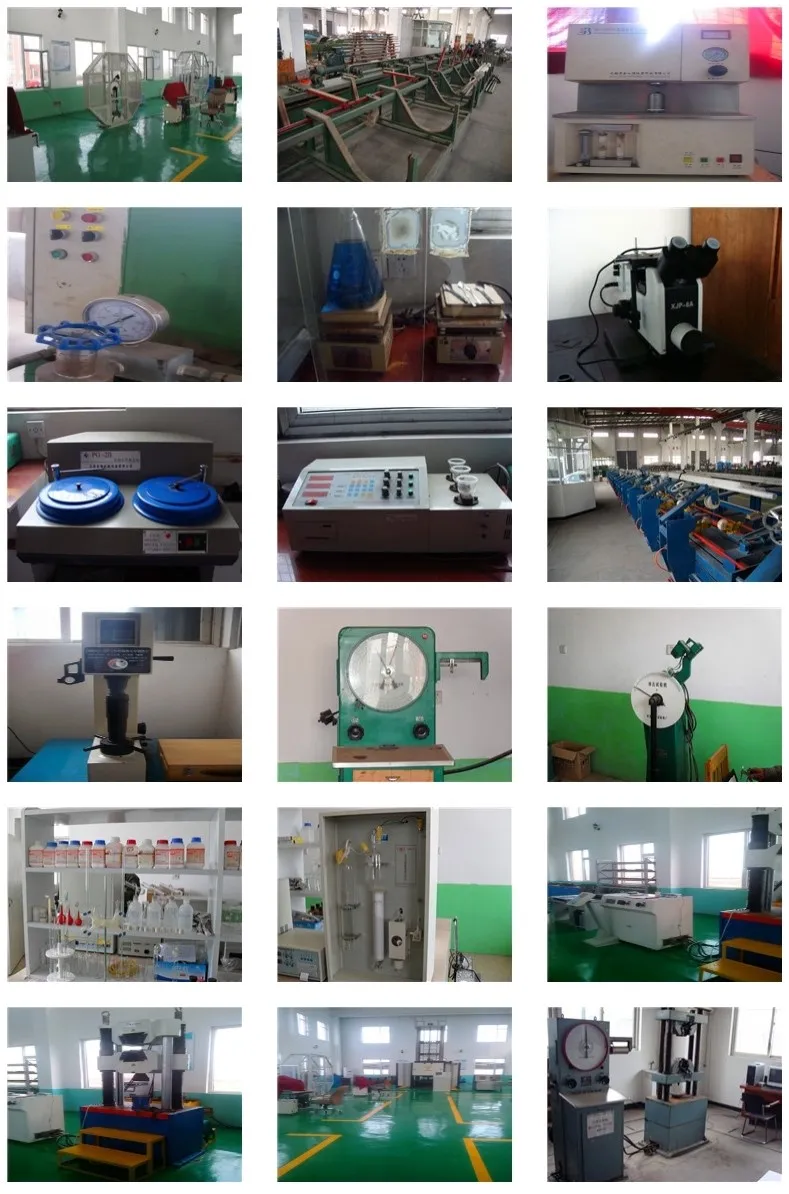
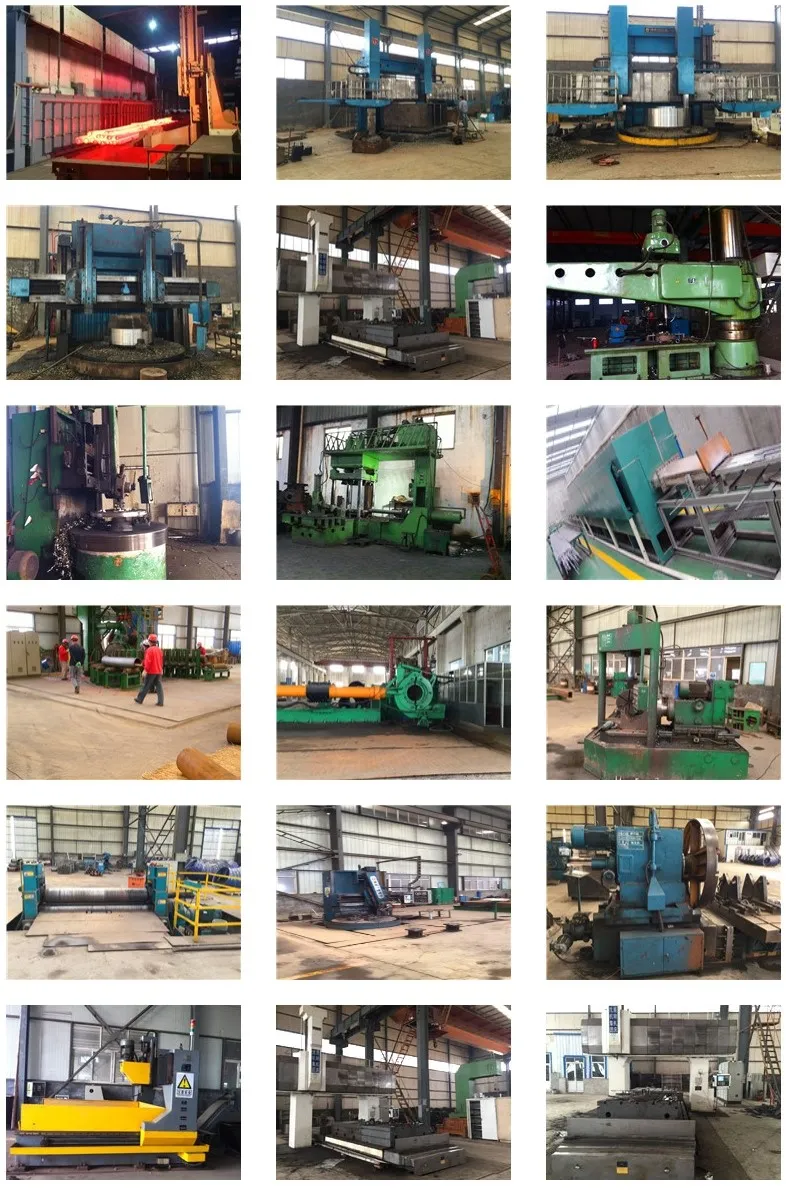
⚒️Gnee Alloy Production Line Equipment and Product Testing
Contact us for the latest export price quote for 625 Alloy
fAQ
Q1: Can I "upgrade" my existing ASTM B446 stock to AMS 5666 through additional testing?
A: Generally, NO. The difference begins at the melting stage. If the material wasn't refined via VIM+VAR and forged to specific reduction ratios, post-production testing cannot create the required microstructure and grain refinement mandated by AMS 5666.
Q2: Is GH3625 interchangeble with AMS 5666 for international projects?
A: Yes. GH3625 is the technische designation used within the Chinese national standard system for the exact same metallurgical system as UNS N06625. We provide the technical parity documents to prove our GH3625 meets the technical threshold of AMS 5666.
Q3: Do you offer third-party inspection (SGS/TUV) for international audits?
A: Absolutely. We welcome Third-Party Verification to confirm that our chemistry and internal integrity meet your specific subsea manifold or wellhead specifications.
Q4: What is the lead time for custom-diameter AMS 5666 forgings?
A: We have most standard sizes In Stock. Custom forgings typically take 4-6 weeks, which is among the shortest lead times in the industry for Aviation Grade quality.



