


For procurement managers and quality engineers in the aerospace and defense sectors, the most costly mistake is a failed audit. If drawings explicitly require aerospace standards (AMS 5581), but the delivered materials conform to industry standards (ASTM B444), a $100,000 order of Inconel 625 seamless alloy pipe could become scrap overnight.
At Gnee Alloy, we eliminate these risks. We provide audit-compliant documentation and technical selection support to ensure the structural integrity of your projects.
Click to get an Inconel 625 product quote
AMS 5581 vs ASTM B444: Key Differences for Aerospace Tubing

AMS 5581 vs ASTM B444: Key Differences for Aerospace Tubing
Both AMS 5581 and ASTM B444 apply to nickel-chromium alloy tubing (typically Alloy 625/UNS N06625). The main difference is that AMS 5581 is a highly stringent aerospace specification requiring traceability, tight dimensional tolerances, and rigorous non-destructive testing for critical aircraft components; while ASTM B444 is a broader commercial standard applicable to general engineering and pressure applications.
What is the difference between Inconel 625 Grade 1 and Grade 2?
Inconel 625 Grade 2 products are supplied in the solution-annealed state. The main difference between Grade 1 and Grade 2 lies in the annealing temperature. The minimum annealing temperature for Grade 1 products is 1600°F (871°C), while the minimum annealing temperature for Grade 2 products is 2000°F (1093°C).

1. Overview of AMS 5581 and ASTM B444 Specifications
| Parameter | AMS 5581 | ASTM B444 |
|---|---|---|
| Specification Type | Aerospace Material Specification | General Industrial Standard |
| Material | Inconel 625 (UNS N06625) | Inconel 625 (UNS N06625) |
| Product Form | Seamless Tube (Aerospace Hydraulic) | Seamless / Welded Tube |
| Typical Applications | Aircraft hydraulic lines, fuel systems, aerospace components | Chemical processing, marine, oil & gas, heat exchangers |
| Grade | Grade 1 (Annealed) only | Grade 1 (Annealed) or Grade 2 (Cold Worked) |
| Melting Process | VIM + VAR (mandatory) | VIM + ESR (typical) |
| NACE MR0175 | Not typically required | Compliant (as specified) |
| Certification | EN 10204 Type 3.2 (mandatory) | EN 10204 Type 3.1 or 3.2 |
2. Comparison of chemical composition between AMS 5581 and ASTM B444 (wt%)
| Element | AMS 5581 | ASTM B444 | Key Difference |
|---|---|---|---|
| Nickel (Ni) | ≥ 58.0 (Balance) | ≥ 58.0 (Balance) | Same |
| Chromium (Cr) | 20.0 – 23.0 | 20.0 – 23.0 | Same |
| Molybdenum (Mo) | 8.0 – 10.0 | 8.0 – 10.0 | Same |
| Niobium (Nb) | 3.15 – 4.15 | 3.15 – 4.15 | Same |
| Iron (Fe) | ≤ 5.0 | ≤ 5.0 | Same |
| Titanium (Ti) | ≤ 0.40 | ≤ 0.40 | Same |
| Aluminum (Al) | ≤ 0.40 | ≤ 0.40 | Same |
| Carbon (C) | ≤ 0.10 | ≤ 0.10 | Same |
| Manganese (Mn) | ≤ 0.50 | ≤ 0.50 | Same |
| Silicon (Si) | ≤ 0.50 | ≤ 0.50 | Same |
| Phosphorus (P) | ≤ 0.010% | ≤ 0.015% | AMS stricter |
| Sulfur (S) | ≤ 0.005% | ≤ 0.015% | AMS stricter |
| Cobalt (Co) | ≤ 1.0 | ≤ 1.0 | Same |
Click to download the Inconel 625 alloy PDF file now
3. Key differences between AMS 5581 and ASTM B444

AMS 5581 and ASTM B444 Applications and Industry Focus
AMS 5581: Designed for aerospace and high-integrity applications. Primarily used in aircraft engine piping, hydraulic lines, and thrust reversers.
ASTM B444: A commercial/industrial standard for general-purpose corrosion-resistant and heat exchanger components in marine, chemical, and oil and gas environments.
AMS 5581 and ASTM B444 Manufacturing and Construction Types
AMS 5581: Divided into Type 1 (seamless drawn tube) and Type 2 (welded drawn tube). Both types require a rigorous cold-drawing process to achieve a bright, polished surface and precise dimensional control.
ASTM B444: Primarily specifies seamless tubing, but also covers relevant ASTM specifications for welded tubing.


Heat Treatment and Mechanical Properties of AMS 5581 and ASTM B444
AMS 5581: Specifies specific annealing temperatures (typically between 871°C and 982°C) to obtain optimal ductility and a tensile strength of at least 120 ksi (827 MPa) and a yield strength of at least 60 ksi (414 MPa).
ASTM B444: Allows for different grades based on annealing temperature. Grade 1 (annealed) and Grade 2 (solution annealed) have different creep/stress fracture characteristics, with Grade 2 having a slightly lower minimum tensile strength (100 ksi/690 MPa).
Testing and Quality Control
AMS 5581: Requires stringent quality assurance, including strict traceability and a Factory Test Report (MTR) tracing materials back to the original smelting. Non-destructive testing (NDT), such as eddy current or ultrasonic testing, is typically required to detect microscopic surface defects.
ASTM B444: Requires standard testing (e.g., hydrostatic testing or non-destructive electrical testing), but does not require the same level of aerospace traceability (e.g., specific raw material source control) as AMS 5581.

6. How to choose between AMS 5581 and ASTM B444
Never substitute industrial-grade ASTM B444 for an AMS 5581 blueprint requirement without a formal Material Selection Audit.
Order AMS 5581 if: Your part is flight-safety critical, involves high-vibration engine zones, or needs to pass an FAA/EASA-tier quality audit.
Order ASTM B444 if: You are building high-pressure chemical heat exchangers, offshore manifolds, or power plant piping where Cost-effective Solutions and general corrosion guards are the priority.
Why Choose Gnee as Your Nickel-Based Alloy Supplier
✅️Zero-Defect Guarantee: We provide both grades to ensures your project's Structural Integrity.
✅️MTC 3.1 & 3.2 Traceability: Detailed chemical and mechanical verification documented with every batch.
✅️Direct Factory Pricing: Benefit from Wholesale Pricing by cutting out middleman markups.
✅️Ready-to-Ship Inventory: Large stock of standard aerospace and industrial schedules for Fast Global Shipping.

Gnee Alloy Inconel 625 Certificate
📦 Packaging and Shipping
All Nickel Based Alloy products are packaged using the following methods:
Wooden pallets or crates
Moisture-proof packaging
Labels with furnace number, standard, and size labels
Shipped worldwide by sea, air, or express

Gnee Alloy Alloy 625 Product Packing
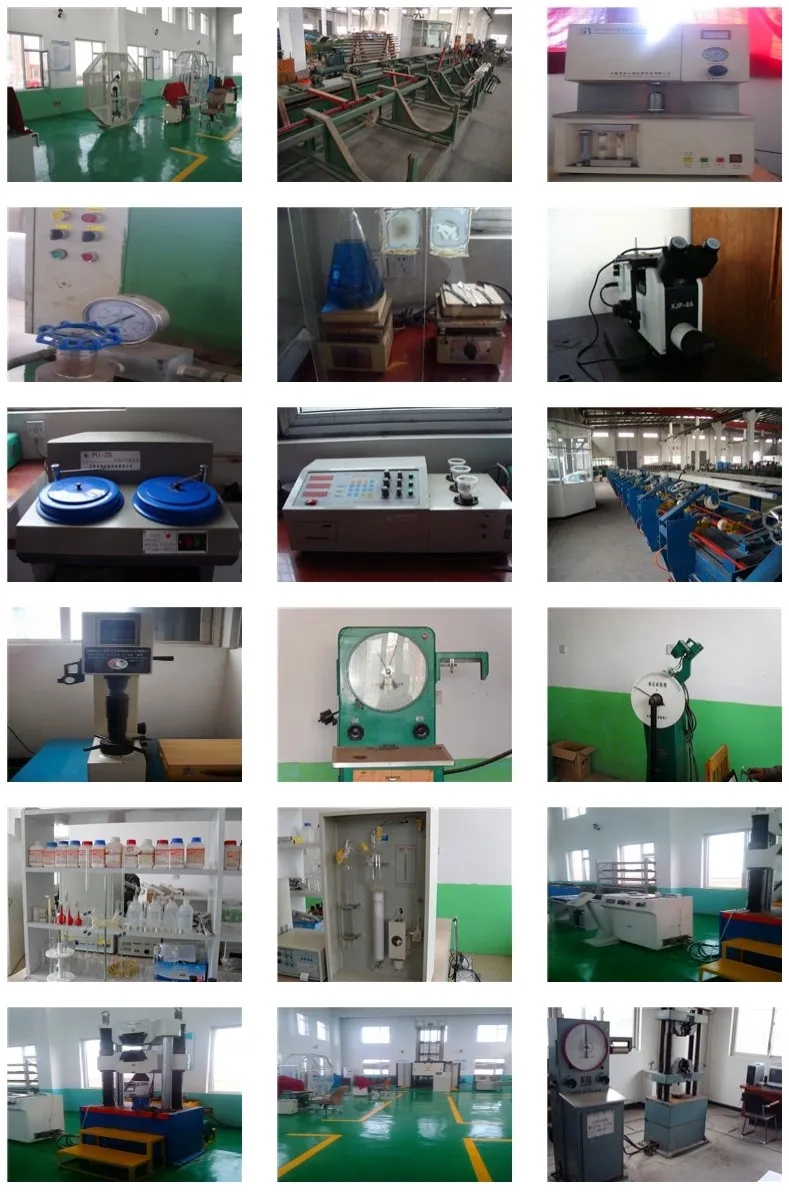
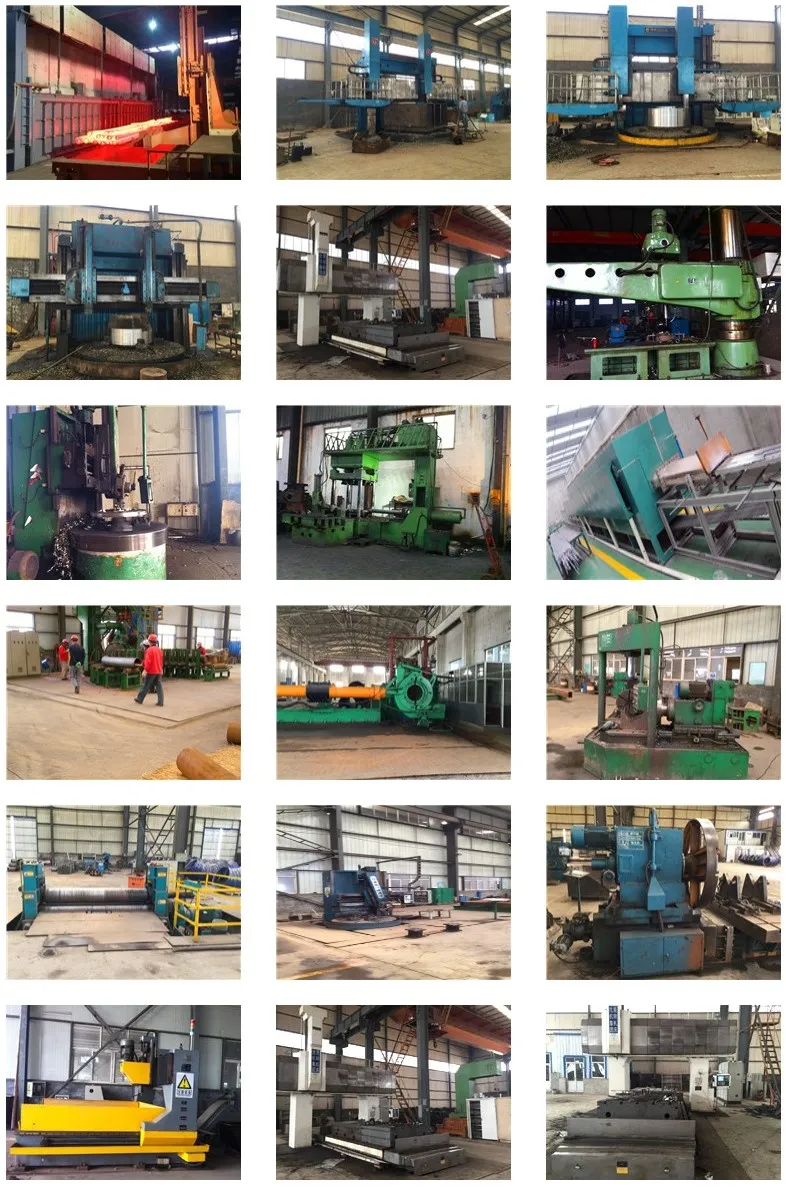
⚒️Gnee Alloy Production Line Equipment and Product Testing
Contact us for the latest export price quote for 625 Alloy
FAQ
Q1: Can I "upgrade" ASTM B444 to AMS 5581 through additional testing?
A: Generally, No. The difference often begins at the melting stage (VIM+VAR). If the raw material heat wasn't refined for aerospace purity and grain size from the start, post-production testing cannot bridge the metallurgical gap.
Q2: Is GH3625 (Inconel 625) interchangeable between these two standards?
A: Yes, provided the manufacturing route meets the specific code. We produce GH3625 that is dual-certified to meet the parity of both UNS N06625 and AMS/ASTM requirements.
Q3: Does the BA surface finish affect the audit?
A: Absolutely. AMS 5581 frequently specifies a Bright Annealed (BA) finish to ensure zero oxidation scale inside the tube, which is a mandatory requirement for precision hydraulic sensors and fuel injectors.
Q4: Do you offer bulk discounts for aerospace maintenance (MRO) programs?
A: Yes. As a Reliable Supplier, we support long-term MRO and OEM contracts with tiered wholesale rates.



