


A Comprehensive Guide to Duplex Stainless Steels: 2205 (UNS S32205/UNS S31803)
What is 2205 (UNS S32205/UNS S31803)?
Designated as UNS S32205 or DIN W.Nr. 1.4462, F60 is a duplex stainless steel known for its two-phase structure, including a ferrite phase and an austenite phase. With a chromium content of 22%, a molybdenum content of 3%, and a nickel content of 5% to 6%, this alloy exhibits superior properties. It has a significantly higher yield strength than standard austenitic stainless steel grades. In addition, it also has excellent resistance to pitting and crevice corrosion, making it suitable for use in a wide range of corrosive environments. Notably, it has commendable weldability, further enhancing its overall usefulness.
Designated as UNS S31803 or DIN W.Nr. 1.4462, F51 is another common duplex stainless steel that is very similar to UNS S32205, although the requirements for chromium, molybdenum and nitrogen content may be slightly lower. Generally, in actual use, UNS S31803 and S32205 are often referred to as "duplex stainless steel 2205".
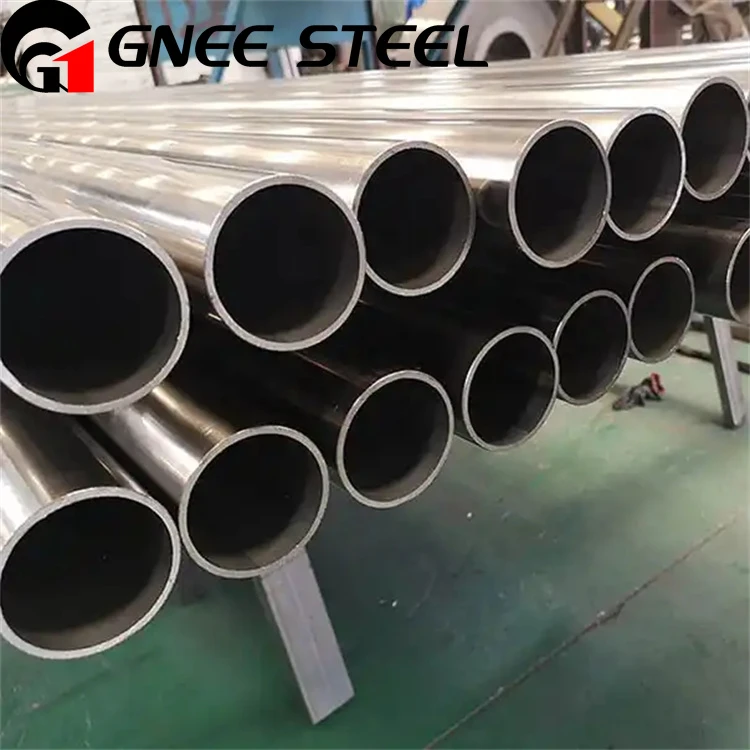
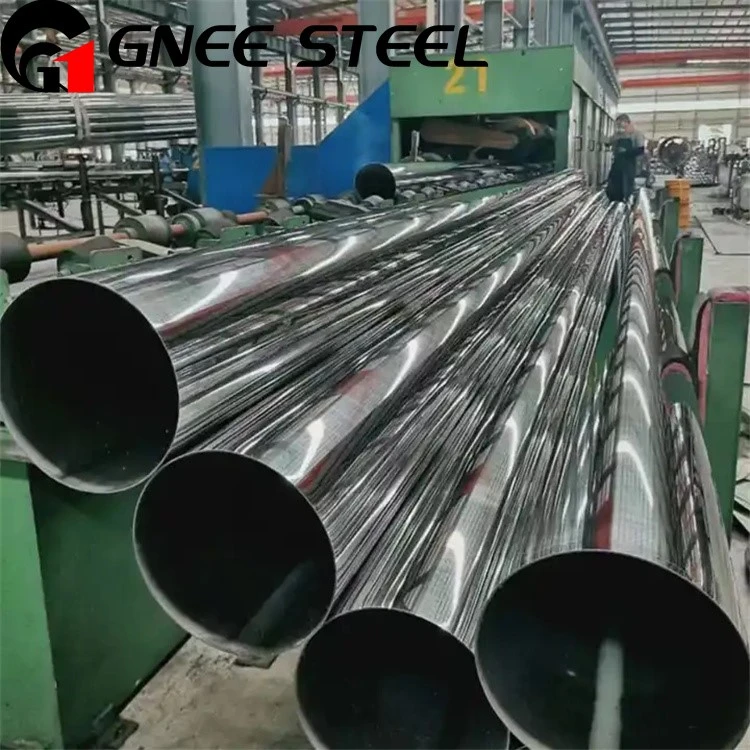
Duplex stainless steel refers to stainless steel with both austenite and ferrite phases in the structure, which combines the performance characteristics of both ferritic steel and austenitic steel. The presence of austenite phase reduces the brittleness of high-temperature ferritic steel, prevents the tendency of grain growth, and improves the toughness and weldability of ferritic steel; the presence of ferrite phase increases the yield strength of austenitic steel, while significantly improving its resistance to stress corrosion cracking and intergranular corrosion.
UNS S31803 vs. UNS S32205: A Notable Contrast
UNS S31803 and S32205 have more similarities than differences. Firstly, both are stainless steel alloys with very similar elemental compositions. They belong to the duplex 2205 family, which consists of nearly equal proportions of austenite and ferrite. Furthermore, both are very strong and durable, suitable for demanding industrial processes that require the material to withstand harsh conditions.
The main differentiating factor between the two lies in the nitrogen content. UNS S32205 contains a higher nitrogen content, providing an additional protective layer to the already strong surface. The presence of nitrogen enhances the alloy's strength and increases its resistance to corrosive compounds that compromise its structural integrity. This higher corrosion resistance gives UNS S32205 a slight but noteworthy advantage over its counterparts.
The enhanced self-protective properties due to the introduction of nitrogen are an added benefit. Previously a reliable duplex steel, the addition of nitrogen further enhances its ability to resist wear and maintain integrity in a variety of applications, solidifying its position as a reliable and resilient material.
Corrosion resistance of 2205 grade
2205 grade stainless steel has excellent corrosion resistance, much higher than 316 grade. It resists localized corrosion types such as intergranular corrosion, crevice corrosion and pitting. The CPT of this type of stainless steel is about 35°C. This grade can resist chloride stress corrosion cracking (SCC) at 150°C. 2205 grade stainless steel is a suitable alternative to austenitic stainless steel, especially in premature failure environments and marine environments.
Compared with austenitic stainless steel, duplex stainless steel is less sensitive to intergranular corrosion. When duplex stainless steel is sensitized, carbides precipitate preferentially at the δ/γ phase boundary, δ precipitates on one side of the phase, and the phase boundary carbides δ/γ precipitate with difficulty and in small quantities. Since austenite grains and ferrite grains surround each other, the carbides on one side of the phase can be quickly replenished by diffusion from the high-chromium ferrite interior, even if the precipitation of δ/γ phase boundary carbides creates a chromium-poor area, a continuous network cannot be formed, thereby avoiding the deepening of intergranular corrosion.
Duplex stainless steel has high stress corrosion resistance, which increases with the increase of ferrite content. Stress rupture sensitivity is minimum when the ferrite phase content is about 50%, because cracks originate in the austenite matrix and once they extend to the ferrite phase:
(1) Under low stress, it is difficult for slip to occur inside the ferrite phase and cause cracks;
(2) The dispersed ferrite has a negative potential relative to the austenite phase, which plays a cathodic protection role for the austenite phase;
(3) The austenite phase is dispersed in the ferrite matrix and mechanically prevents crack propagation due to the locking effect.
Heat resistance of 2205 grade
The high oxidation resistance of the 2205 grade is compromised by its embrittlement above 300°C. This embrittlement can be changed by full solution annealing. The grade performs well at temperatures below 300°C.
Heat treatment of 2205 grade
The most suitable heat treatment for this grade is solution treatment (annealing) at a temperature between 1020 – 1100°C, followed by rapid cooling. 2205 grade can be work hardened, but cannot be hardened by thermal methods.



