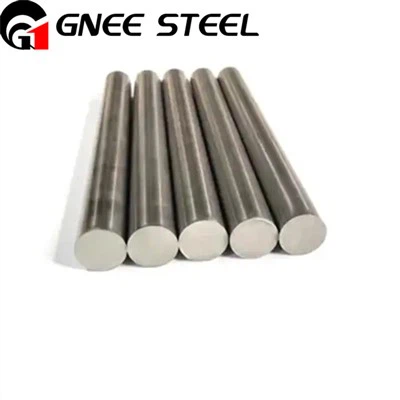
As a long - standing supplier of molybdenum alloy products, I often receive inquiries from customers about various properties of molybdenum alloys. One of the most frequently asked questions is about the thermal conductivity of molybdenum alloy. In this blog post, I'll delve into this topic in detail, sharing scientific insights and how it relates to our high - quality molybdenum alloy offerings.
Understanding Thermal Conductivity
Before we discuss the thermal conductivity of molybdenum alloy, it's essential to understand what thermal conductivity is. Thermal conductivity, denoted by the symbol (k), is a measure of a material's ability to conduct heat. It is defined as the quantity of heat (in watts) that passes through a unit area (in square meters) of a material per unit thickness (in meters) per unit temperature difference (in Kelvin) across the material. In simpler terms, a material with high thermal conductivity can transfer heat quickly, while one with low thermal conductivity is a poor heat conductor and can act as an insulator.
Thermal Conductivity of Pure Molybdenum
Pure molybdenum is a metal known for its excellent thermal and electrical conductivity. At room temperature (around 20 - 25°C or 293 - 298 K), the thermal conductivity of pure molybdenum is approximately 138 W/(m·K). This relatively high value makes it suitable for applications where efficient heat transfer is required. The reason for this high thermal conductivity lies in its atomic structure. Molybdenum has a body - centered cubic (BCC) crystal structure. In this structure, the atoms are arranged in a way that allows for relatively free movement of electrons. Since electrons are the primary carriers of heat in metals, the ease of electron movement in molybdenum contributes to its high thermal conductivity.
Thermal Conductivity of Molybdenum Alloys
Molybdenum alloys are created by adding other elements to pure molybdenum to enhance certain properties such as strength, hardness, or corrosion resistance. However, the addition of alloying elements can affect the thermal conductivity of the resulting alloy.
The exact thermal conductivity of a molybdenum alloy depends on the type and amount of alloying elements present. For example, when small amounts of elements like titanium, zirconium, and carbon are added to form TZM (Titanium - Zirconium - Molybdenum) alloy, the thermal conductivity is slightly lower than that of pure molybdenum. TZM alloy typically has a thermal conductivity in the range of 100 - 120 W/(m·K) at room temperature. The reduction in thermal conductivity occurs because the added alloying elements disrupt the regular atomic structure of molybdenum. These foreign atoms scatter the electrons, impeding their movement and thus reducing the efficiency of heat transfer.


Another commonly used molybdenum alloy is Molybdenum Alloy 360. The thermal conductivity of Molybdenum Alloy 360 may vary depending on its specific composition and processing conditions. Generally, it has a thermal conductivity that is in the ballpark of other molybdenum - based alloys, influenced by the alloying elements and their distribution within the material.
Factors Affecting the Thermal Conductivity of Molybdenum Alloys
- Alloying Elements: As mentioned earlier, the type and amount of alloying elements play a crucial role. Elements with different atomic sizes and bonding characteristics can cause lattice distortions, which in turn affect electron mobility and heat transfer. For instance, elements with larger atomic radii than molybdenum can create more significant disruptions in the crystal lattice, leading to a greater reduction in thermal conductivity.
- Temperature: The thermal conductivity of molybdenum alloys is also temperature - dependent. In general, as the temperature increases, the thermal conductivity of metals tends to decrease. This is because at higher temperatures, the lattice vibrations (phonons) become more intense. Phonons can scatter electrons, reducing their ability to carry heat. For molybdenum alloys, the rate of decrease in thermal conductivity with increasing temperature can vary depending on the alloy composition.
- Microstructure: The microstructure of the molybdenum alloy, including grain size, grain orientation, and the presence of precipitates, can impact thermal conductivity. A fine - grained microstructure may have more grain boundaries. Grain boundaries can act as scattering centers for electrons and phonons, reducing the thermal conductivity. On the other hand, a well - oriented grain structure may allow for more efficient heat transfer in certain directions.
Applications Based on Thermal Conductivity
The thermal conductivity of molybdenum alloys makes them suitable for a wide range of applications:
- Electronics: In the electronics industry, where heat management is crucial, molybdenum alloys are used in heat sinks, substrates, and other components. For example, ASTM B387 Molybdenum Alloy Bar can be used to fabricate heat - dissipating structures due to its relatively good thermal conductivity. The ability of molybdenum alloys to quickly transfer heat away from sensitive electronic components helps prevent overheating and ensures the reliable operation of electronic devices.
- Aerospace and Aviation: In aerospace applications, molybdenum alloys are used in engine components and heat shields. The high - temperature stability and reasonable thermal conductivity of these alloys make them suitable for withstanding the extreme heat generated during flight. They can efficiently transfer heat away from critical parts, protecting them from thermal damage.
- Nuclear Industry: Molybdenum alloys are also used in the nuclear industry. For instance, in nuclear reactors, they can be used in components where heat needs to be transferred safely and efficiently. The AISI 4027H Molybdenum Alloy may find applications in this field due to its combination of properties, including thermal conductivity.
Our Offerings as a Molybdenum Alloy Supplier
As a supplier of molybdenum alloys, we understand the importance of thermal conductivity in different applications. We offer a wide range of molybdenum alloy products, including bars, sheets, and custom - fabricated parts. Our products are carefully manufactured to ensure consistent quality and the desired thermal conductivity.
We have a team of experts who can assist you in selecting the right molybdenum alloy for your specific application. Whether you need an alloy with high thermal conductivity for a heat - transfer application or one with enhanced strength and moderate thermal conductivity, we can provide you with the appropriate solution.
Contact Us for Procurement
If you are interested in our molybdenum alloy products and would like to discuss your requirements in detail, we encourage you to reach out to us. Our sales team is ready to answer all your questions regarding the thermal conductivity, composition, and application suitability of our molybdenum alloys. We can also provide you with samples and detailed technical specifications. Start a conversation with us today to find the perfect molybdenum alloy solution for your project.
References
- "Materials Science and Engineering: An Introduction" by William D. Callister Jr. and David G. Rethwisch.
- ASM Handbook, Volume 2: Properties and Selection: Nonferrous Alloys and Special - Purpose Materials.
- Research papers on molybdenum alloys published in peer - reviewed journals such as Acta Materialia and Metallurgical and Materials Transactions.