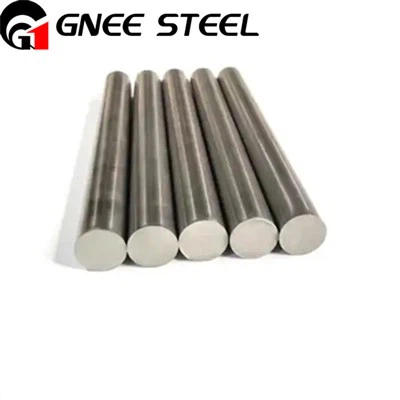
Superalloys are a class of high-performance materials that have found extensive applications in critical industries such as aerospace, power generation, and automotive due to their exceptional mechanical properties at elevated temperatures. Among these properties, fracture toughness is of paramount importance as it determines the ability of a superalloy to resist crack propagation and prevent catastrophic failure. As a leading superalloy supplier, we understand the significance of fracture toughness in ensuring the reliability and safety of components made from these advanced materials. In this blog, we will delve into the fracture toughness properties of superalloys, exploring the factors that influence them and their implications for various applications.

Understanding Fracture Toughness
Fracture toughness is a measure of a material's resistance to crack propagation under an applied load. It is typically quantified using parameters such as the stress intensity factor (K), which describes the stress field near the tip of a crack, and the critical stress intensity factor (Kc), which represents the maximum stress intensity that a material can withstand before the crack begins to grow unstably. Another commonly used parameter is the J-integral, which provides a more general measure of the energy available for crack growth.
In the context of superalloys, fracture toughness is crucial because these materials are often subjected to high stresses and harsh environmental conditions in service. For example, in aerospace engines, superalloy components such as turbine blades and discs are exposed to high temperatures, high pressures, and cyclic loading, which can lead to the initiation and propagation of cracks. A material with high fracture toughness can better withstand these conditions, reducing the risk of sudden and catastrophic failure.

Factors Affecting Superalloy Fracture Toughness
Chemical Composition
The chemical composition of a superalloy plays a significant role in determining its fracture toughness. Superalloys are typically composed of a base metal, such as nickel, cobalt, or iron, along with various alloying elements. These alloying elements can have a profound impact on the microstructure and mechanical properties of the material.
For instance, elements like chromium, molybdenum, and tungsten are often added to improve the strength and corrosion resistance of superalloys. However, these elements can also affect the fracture toughness. In some cases, excessive amounts of certain alloying elements can lead to the formation of brittle phases, which can reduce the fracture toughness of the material. On the other hand, elements like titanium and aluminum can form strengthening precipitates, which can enhance the strength and fracture toughness of the superalloy.
Microstructure
The microstructure of a superalloy, including the grain size, phase distribution, and precipitate morphology, has a direct influence on its fracture toughness. A fine-grained microstructure generally exhibits better fracture toughness compared to a coarse-grained one. This is because fine grains can impede the propagation of cracks by providing more barriers for crack growth.

The presence of secondary phases and precipitates can also affect the fracture toughness. For example, the gamma prime (γ') phase, which is a common strengthening phase in nickel-based superalloys, can enhance the strength of the material. However, if the γ' phase is too large or if it forms in an unfavorable morphology, it can reduce the fracture toughness by promoting crack initiation and propagation.
Heat Treatment
Heat treatment is a critical process in the manufacturing of superalloys as it can significantly alter the microstructure and mechanical properties of the material. Different heat treatment procedures, such as solution annealing, aging, and quenching, can be used to optimize the fracture toughness of superalloys.
Solution annealing is often used to dissolve the secondary phases and precipitates in the material, resulting in a more homogeneous microstructure. This can improve the ductility and fracture toughness of the superalloy. Aging treatment, on the other hand, is used to precipitate the strengthening phases, which can enhance the strength of the material. However, the aging process needs to be carefully controlled to avoid the formation of brittle phases that can reduce the fracture toughness.
Fracture Toughness in Different Superalloys
Nickel-Based Superalloys
Nickel-based superalloys are widely used in high-temperature applications due to their excellent strength, corrosion resistance, and creep resistance. These superalloys typically have good fracture toughness, especially at elevated temperatures. For example, GH901 Alloy Bar is a nickel-based superalloy that exhibits high strength and good fracture toughness at temperatures up to 700°C. The alloy's fracture toughness is attributed to its fine-grained microstructure and the presence of strengthening precipitates, which help to impede crack propagation.
Cobalt-Based Superalloys
Cobalt-based superalloys are known for their excellent wear resistance and high-temperature strength. These superalloys generally have good fracture toughness, although their fracture toughness may be lower than that of nickel-based superalloys at very high temperatures. GH3536 Alloy is a cobalt-based superalloy that is commonly used in applications such as gas turbine engines and chemical processing equipment. The alloy's fracture toughness is influenced by its chemical composition and microstructure, which can be optimized through heat treatment.
Iron-Based Superalloys
Iron-based superalloys are a more cost-effective alternative to nickel-based and cobalt-based superalloys. These superalloys typically have lower strength and fracture toughness compared to their nickel and cobalt counterparts, but they can still be used in applications where moderate performance is required. NS313 NS315 Stain Steel Pipe is an example of an iron-based superalloy that is used in various industrial applications. The pipe's fracture toughness is determined by its chemical composition, microstructure, and manufacturing process.
Implications for Applications
The fracture toughness properties of superalloys have significant implications for their applications in various industries. In aerospace, for example, superalloy components with high fracture toughness are essential for ensuring the safety and reliability of aircraft engines. Turbine blades and discs made from superalloys need to be able to withstand high stresses and cyclic loading without cracking or failing. A material with low fracture toughness could lead to premature failure of these components, which could have catastrophic consequences.
In the power generation industry, superalloys are used in components such as steam turbines and gas turbines. These components are exposed to high temperatures and pressures, which can cause cracks to initiate and propagate. Superalloys with high fracture toughness can better resist these conditions, reducing the risk of failure and improving the efficiency and reliability of power generation systems.
In the automotive industry, superalloys are used in applications such as exhaust systems and engine components. These components need to be able to withstand high temperatures and mechanical stresses, and superalloys with good fracture toughness can provide the necessary durability and performance.

Contact Us for Superalloy Procurement
As a trusted superalloy supplier, we offer a wide range of high-quality superalloys with excellent fracture toughness properties. Our products are carefully selected and tested to ensure that they meet the highest standards of quality and performance. Whether you are in the aerospace, power generation, automotive, or any other industry, we can provide you with the superalloys you need for your specific applications.
If you are interested in learning more about our superalloy products or would like to discuss your procurement requirements, please do not hesitate to contact us. Our team of experts is ready to assist you and provide you with the best solutions for your needs.
References
- ASM Handbook Volume 19: Fatigue and Fracture. ASM International.
- Superalloys: Fundamentals and Applications. Edited by Roger C. Reed, Ian Polmear, and Brian Derby. Wiley.
- Fracture Mechanics: Fundamentals and Applications. Third Edition. By T. L. Anderson. CRC Press.