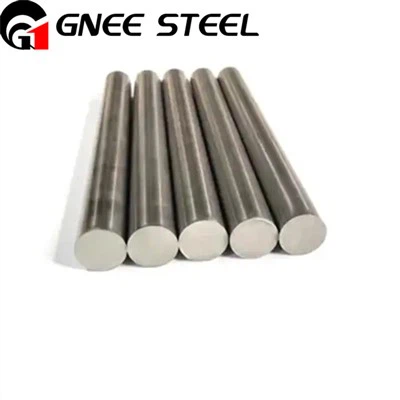
As a supplier of Zircaloy 4, I often encounter inquiries regarding the post - welding heat treatment requirements for this remarkable alloy. Zircaloy 4 is a zirconium - based alloy known for its excellent corrosion resistance, low neutron absorption cross - section, and good mechanical properties, making it a prime choice in nuclear applications such as fuel cladding and structural components in nuclear reactors. In this blog, I will delve into the post - welding heat treatment requirements for Zircaloy 4, offering detailed insights into why it is necessary and how it should be carried out.
Why Post - Welding Heat Treatment for Zircaloy 4?
Welding is a common fabrication process for Zircaloy 4 components. However, the welding process can introduce various issues that need to be addressed through post - welding heat treatment.
Firstly, welding can cause residual stresses in the material. As the weld cools, it contracts, and the surrounding base metal restricts this contraction, leading to the build - up of residual stresses. These residual stresses can have a detrimental effect on the mechanical properties of the Zircaloy 4 component. They may reduce the fatigue life of the part, increase the susceptibility to stress - corrosion cracking, and even cause distortion during subsequent machining or service. Post - welding heat treatment helps to relieve these residual stresses, improving the overall performance and reliability of the welded component.
Secondly, the rapid heating and cooling during welding can result in microstructural changes in Zircaloy 4. The heat - affected zone (HAZ) adjacent to the weld may experience grain growth, the formation of non - equilibrium phases, or changes in the distribution of alloying elements. These microstructural changes can degrade the corrosion resistance and mechanical properties of the material. Heat treatment can be used to restore the desired microstructure, ensuring that the component retains its excellent properties.
General Post - Welding Heat Treatment Procedures
The post - welding heat treatment of Zircaloy 4 typically involves a combination of stress - relieving and annealing processes.
Stress - Relieving
Stress - relieving is the first step in the post - welding heat treatment process. It is usually carried out at a relatively low temperature compared to annealing. The temperature for stress - relieving Zircaloy 4 is typically in the range of 550 - 650°C (1022 - 1202°F). The component is heated to this temperature and held for a sufficient period to allow the residual stresses to relax. The holding time depends on the thickness of the welded section. Generally, a holding time of 1 - 2 hours per 25 mm (1 inch) of thickness is recommended.
During stress - relieving, the component should be heated and cooled slowly to avoid the introduction of new thermal stresses. A heating rate of 50 - 100°C (90 - 180°F) per hour is commonly used. After the holding time, the component is cooled at a controlled rate, typically in the furnace, to room temperature.
Annealing
After stress - relieving, annealing is often performed to further improve the microstructure and mechanical properties of the welded Zircaloy 4. Annealing is carried out at a higher temperature than stress - relieving. The annealing temperature for Zircaloy 4 is usually in the range of 700 - 800°C (1292 - 1472°F).
At this temperature, the material undergoes recrystallization, which helps to refine the grain structure and eliminate any non - equilibrium phases formed during welding. The holding time for annealing is also related to the thickness of the component, typically around 0.5 - 1 hour per 25 mm (1 inch) of thickness.
Similar to stress - relieving, the heating and cooling rates during annealing should be carefully controlled. A slow heating rate of 50 - 100°C (90 - 180°F) per hour is used to ensure uniform heating. After the holding time, the component can be cooled in the furnace or in air, depending on the specific requirements of the application.
Standards and Specifications
There are several industry standards and specifications that govern the post - welding heat treatment of Zircaloy 4. For example, the ASTM B658 Zirconium Alloy Pipe and ASTM B523 Zirconium and Zirconium Alloy Tubes provide detailed guidelines on the heat treatment processes for zirconium alloys, including Zircaloy 4. These standards ensure that the post - welding heat treatment is carried out in a consistent and reliable manner, meeting the quality requirements of different applications.


Comparison with Other Zirconium Alloys
It is worth noting that the post - welding heat treatment requirements for Zircaloy 4 may differ from those of other zirconium alloys. For instance, Zirconium Alloy 705 has a different chemical composition and microstructure, which leads to different responses to welding and heat treatment. Zirconium Alloy 705 contains a higher amount of niobium, which can affect the recrystallization temperature and the formation of phases during heat treatment. Therefore, the heat treatment parameters for Zirconium Alloy 705, such as the stress - relieving and annealing temperatures and holding times, may be different from those of Zircaloy 4.
Quality Control during Post - Welding Heat Treatment
Quality control is crucial during the post - welding heat treatment of Zircaloy 4. Temperature monitoring is one of the most important aspects. Accurate temperature measurement devices, such as thermocouples, should be used to ensure that the component reaches and maintains the desired heat treatment temperature. The temperature distribution within the component should also be uniform to avoid the formation of new residual stresses or non - uniform microstructural changes.
In addition, non - destructive testing methods, such as ultrasonic testing and radiography, can be used to detect any internal defects that may have been introduced during welding or heat treatment. Mechanical testing, including tensile testing, hardness testing, and fatigue testing, can be performed to verify the mechanical properties of the heat - treated component.
Conclusion
In conclusion, post - welding heat treatment is an essential process for Zircaloy 4 components. It helps to relieve residual stresses, restore the desired microstructure, and improve the mechanical and corrosion properties of the welded parts. By following the appropriate heat treatment procedures and quality control measures, we can ensure that the Zircaloy 4 components meet the high - quality requirements of various applications, especially in the nuclear industry.
If you are interested in purchasing Zircaloy 4 or have any questions regarding its post - welding heat treatment or other aspects, please feel free to contact us for further discussion and procurement negotiation. We are committed to providing high - quality Zircaloy 4 products and professional technical support.
References
- ASTM International. ASTM B658 Standard Specification for Zirconium and Zirconium Alloy Seamless and Welded Pipe.
- ASTM International. ASTM B523 Standard Specification for Zirconium and Zirconium Alloy Seamless and Welded Tubes.
- Various technical reports on zirconium alloy heat treatment and properties from research institutions and industry sources.