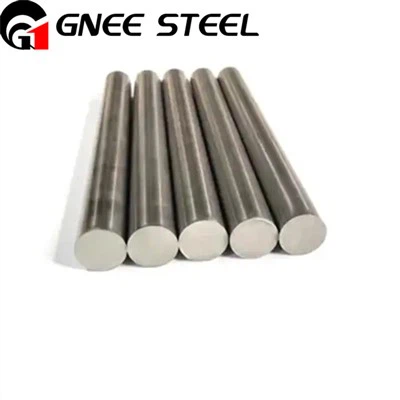
7075 aluminum alloy is a well - known high - strength aluminum alloy that has found extensive applications in various industries, such as aerospace, automotive, and sports equipment. One of the critical performance aspects that often concerns engineers and manufacturers is its fatigue resistance. In this blog, as a 7075 Aluminum Alloy supplier, I will delve into the topic of whether 7075 aluminum alloy has good fatigue resistance.
Understanding Fatigue Resistance
Before discussing the fatigue resistance of 7075 aluminum alloy, it is essential to understand what fatigue resistance means. Fatigue is the progressive and localized structural damage that occurs when a material is subjected to cyclic loading. Fatigue resistance refers to a material's ability to withstand these cyclic loads without failing. A material with good fatigue resistance can endure a large number of stress cycles before experiencing fatigue failure, which is often manifested as cracks and ultimately, breakage.
Factors Affecting Fatigue Resistance of 7075 Aluminum Alloy
Chemical Composition
7075 aluminum alloy is composed mainly of aluminum, with significant amounts of zinc, magnesium, and copper. Zinc is the primary alloying element, which contributes to the high strength of the alloy. Magnesium further enhances the strength through solid - solution strengthening and precipitation hardening. Copper also plays a role in improving the strength and corrosion resistance. However, these alloying elements can also have an impact on fatigue resistance. For example, the presence of copper can increase the susceptibility to corrosion fatigue in certain environments.
Heat Treatment
Heat treatment is a crucial process for 7075 aluminum alloy. The most common heat - treatment condition for 7075 is T6, which involves solution heat treatment followed by artificial aging. This process allows the formation of fine precipitates within the aluminum matrix, which significantly increases the strength of the alloy. However, the heat - treatment process can also introduce residual stresses. If not properly managed, these residual stresses can act as stress raisers and reduce the fatigue resistance of the alloy. On the other hand, appropriate heat - treatment can optimize the microstructure of the alloy, improving its fatigue performance.
Microstructure
The microstructure of 7075 aluminum alloy has a direct influence on its fatigue resistance. A fine - grained microstructure generally provides better fatigue resistance compared to a coarse - grained one. Fine grains can impede the propagation of fatigue cracks, as the grain boundaries act as barriers to crack growth. In addition, the distribution and morphology of the precipitates also affect fatigue behavior. Uniformly distributed and fine precipitates can enhance the fatigue strength of the alloy.
Comparison with Other Aluminum Alloys
To better understand the fatigue resistance of 7075 aluminum alloy, it is useful to compare it with other commonly used aluminum alloys, such as Aluminum Alloy 5052, Aluminum Alloy 6061, and Aluminum Alloy 2024.
Aluminum Alloy 5052
Aluminum Alloy 5052 is a non - heat - treatable alloy with good corrosion resistance and moderate strength. It has relatively good fatigue resistance, especially in low - stress applications. However, compared to 7075 aluminum alloy, its strength is much lower. In high - stress and high - cycle fatigue applications, 7075 generally outperforms 5052 due to its higher strength.
Aluminum Alloy 6061
Aluminum Alloy 6061 is a heat - treatable alloy that is widely used in various industries. It has a good combination of strength, corrosion resistance, and machinability. In terms of fatigue resistance, 6061 is comparable to 7075 in some low - to - moderate stress applications. However, 7075 has higher strength, which gives it an advantage in high - stress and high - cycle fatigue situations.
Aluminum Alloy 2024
Aluminum Alloy 2024 is another high - strength aluminum alloy commonly used in aerospace applications. It has good fatigue resistance, especially in the T3 temper. However, 7075 often has better fatigue performance in high - stress conditions due to its higher strength and different alloying system.
Applications and Fatigue Resistance
The fatigue resistance of 7075 aluminum alloy makes it suitable for a wide range of applications.
Aerospace Industry
In the aerospace industry, components such as aircraft wings, fuselage frames, and landing gear are subjected to cyclic loading during flight. 7075 aluminum alloy's high strength and relatively good fatigue resistance make it a popular choice for these critical components. However, strict quality control and proper design are required to ensure its long - term fatigue performance.
Automotive Industry
In the automotive industry, 7075 aluminum alloy can be used in parts such as suspension components and engine mounts. These parts are exposed to cyclic stresses during vehicle operation. The alloy's fatigue resistance helps to ensure the reliability and safety of these components.
Sports Equipment
7075 aluminum alloy is also used in sports equipment, such as bicycle frames and golf club heads. Cyclic loading occurs during the use of these equipment. Good fatigue resistance allows the equipment to withstand repeated impacts and stresses, providing a longer service life.
Improving the Fatigue Resistance of 7075 Aluminum Alloy
Surface Treatment
Surface treatment methods, such as anodizing and shot peening, can be used to improve the fatigue resistance of 7075 aluminum alloy. Anodizing forms a protective oxide layer on the surface of the alloy, which can enhance corrosion resistance and reduce the initiation of fatigue cracks. Shot peening introduces compressive residual stresses on the surface of the alloy, which can counteract the tensile stresses during cyclic loading and impede crack propagation.
Design Optimization
Proper design is crucial for improving the fatigue performance of 7075 aluminum alloy components. Designers should avoid sharp corners and notches, as these can act as stress raisers and significantly reduce the fatigue resistance. Smooth transitions and fillets should be used in the design to distribute the stress evenly.
Conclusion
In general, 7075 aluminum alloy has relatively good fatigue resistance, especially considering its high strength. However, its fatigue performance is influenced by various factors, including chemical composition, heat treatment, and microstructure. When compared with other aluminum alloys, 7075 has advantages in high - stress and high - cycle fatigue applications. With proper surface treatment and design optimization, the fatigue resistance of 7075 aluminum alloy can be further enhanced.


If you are in need of high - quality 7075 aluminum alloy for your projects, and are interested in discussing its fatigue resistance and other performance aspects, feel free to reach out to us. We are committed to providing you with the best products and technical support to meet your specific requirements.
References
- Davis, J. R. (Ed.). (2001). Aluminum and Aluminum Alloys. ASM International.
- Totten, G. E., & MacKenzie, D. S. (2003). Handbook of Aluminum: Physical Metallurgy and Processes. CRC Press.
- Dieter, G. E. (1986). Mechanical Metallurgy. McGraw - Hill.