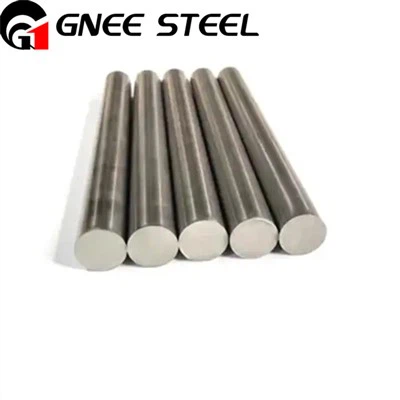
Hey there! As a supplier of Zirconium Alloy 705, I often get asked the question: "Can Zirconium Alloy 705 be welded?" Well, let's dive right into this topic and find out.
First off, let's talk a bit about Zirconium Alloy 705 itself. It's a super - useful alloy with some pretty great properties. It has excellent corrosion resistance, especially in harsh chemical environments. This makes it a top choice in a bunch of industries like chemical processing, nuclear, and even some high - end engineering applications.
Now, back to the main question: welding. The short answer is yes, Zirconium Alloy 705 can be welded. But, like with any welding process, there are some important things to keep in mind.
One of the key factors is the welding environment. Zirconium is a reactive metal. When it's heated during the welding process, it can react with oxygen, nitrogen, and hydrogen in the air. This can lead to the formation of brittle compounds in the weld zone, which can seriously affect the quality and integrity of the weld. So, to prevent this, we need to use an inert gas shielding, like argon or helium. This creates a protective barrier around the weld area, keeping those unwanted gases away.
Another crucial aspect is the welding technique. There are several welding methods that can be used for Zirconium Alloy 705. Tungsten Inert Gas (TIG) welding is a popular choice. It allows for precise control of the heat input and the weld pool. With TIG welding, you can get high - quality, clean welds. Another option is Plasma Arc Welding (PAW). PAW offers a higher energy density, which can result in faster welding speeds. However, it also requires more skill and specialized equipment.
Pre - welding preparation is also super important. The surfaces to be welded need to be clean. Any contaminants, like oil, grease, or oxides, can cause problems during welding. So, we usually use a combination of mechanical cleaning, like grinding or sanding, and chemical cleaning, such as using a suitable solvent.
Post - welding treatment is something that shouldn't be overlooked either. After welding, the weld area may have some residual stresses. These stresses can lead to cracking over time. To relieve these stresses, a heat treatment process is often carried out. This involves heating the welded part to a specific temperature and then cooling it down slowly.
Let's compare Zirconium Alloy 705 with another well - known zirconium alloy, Zircaloy 4. Zircaloy 4 is also widely used, especially in the nuclear industry. While both alloys can be welded, Zirconium Alloy 705 has better corrosion resistance in certain aggressive chemical environments. But Zircaloy 4 has been more extensively studied in the context of nuclear applications, so there's more data available on its long - term performance in that field.
When it comes to standards, ASTM B352 Zirconium Alloy sets out the requirements for zirconium and zirconium alloy plates, sheets, and strips. This standard also provides some guidance on the welding of these alloys. Adhering to these standards is essential to ensure the quality and safety of the welded products.
As a supplier, I've seen the demand for customized products made from Zirconium Alloy 705. Customized Zirconium Alloy Tubes are often used in various industries. Welding plays a crucial role in the production of these tubes. Whether it's joining two tubes together or attaching fittings, proper welding techniques are necessary to ensure the tubes can perform their intended functions.
In my experience, the success of welding Zirconium Alloy 705 also depends on the skill of the welder. A welder who is familiar with the properties of zirconium alloys and has experience in welding them is more likely to produce high - quality welds. Training and certification programs can help welders develop the necessary skills.
If you're in an industry that requires the use of Zirconium Alloy 705 and you're thinking about welding applications, it's a good idea to work closely with a team of experts. This could include materials scientists, welding engineers, and quality control specialists. They can help you develop a welding procedure that meets your specific requirements.
To sum it up, Zirconium Alloy 705 can definitely be welded, but it requires careful consideration of the welding environment, technique, pre - and post - welding treatments. With the right approach, you can achieve strong, reliable welds that meet the high - standards of your applications.
If you're interested in purchasing Zirconium Alloy 705 for your welding projects or any other applications, feel free to reach out for a detailed discussion. We're here to provide you with the best - quality materials and support to ensure the success of your projects.


References
- ASM Handbook Volume 6: Welding, Brazing, and Soldering
- ASTM B352 Standard Specification for Zirconium and Zirconium Alloy Plates, Sheets, and Strips