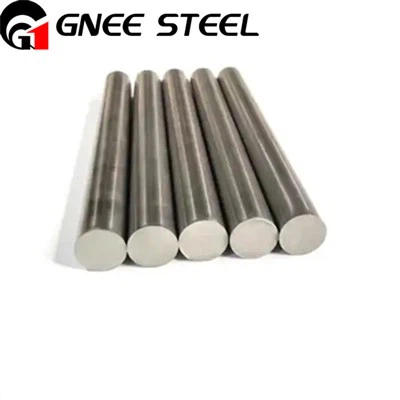
As a seasoned supplier of Hastelloy alloys, I've had the privilege of working closely with a wide range of these remarkable materials. One alloy that often sparks curiosity and detailed inquiries is Hastelloy Alloy B - 3. In this blog post, I'll delve into the distinct characteristics of Hastelloy Alloy B - 3 and how it differs from other types of Hastelloy alloys.
Composition
The composition of an alloy is the foundation that determines its properties. Hastelloy Alloy B - 3 is primarily composed of nickel (Ni), with a minimum content of about 65%. It also contains significant amounts of molybdenum (Mo) at around 28 - 34%, chromium (Cr) in the range of 1 - 3%, and small amounts of other elements like iron (Fe), cobalt (Co), and tungsten (W).
In contrast, Hastelloy C22 Round Bar has a different composition. It has a high nickel content as well, but its chromium content is much higher, typically around 20 - 22.5%, and the molybdenum content is around 12.5 - 14.5%. The higher chromium content in Hastelloy C22 gives it better resistance to oxidizing environments compared to Hastelloy Alloy B - 3.
Hastelloy C Seamless Pipe, represented by Hastelloy C Seamless Pipe, also belongs to the C - series of Hastelloy alloys. Similar to Hastelloy C22, it has a relatively high chromium content which contributes to its excellent resistance to a wide variety of corrosive media, including both oxidizing and reducing acids.
Hastelloy C276 has a composition with about 57% nickel, 15.5 - 16.5% molybdenum, and 14.5 - 16.5% chromium. The balance of these elements gives Hastelloy C276 unique corrosion - resistant properties, especially in reducing environments with the presence of chlorides.
Corrosion Resistance
One of the most crucial aspects of Hastelloy alloys is their corrosion resistance. Hastelloy Alloy B - 3 is renowned for its outstanding resistance to hydrochloric acid across a wide range of concentrations and temperatures. It also shows good resistance to other reducing acids such as sulfuric acid, phosphoric acid, and acetic acid. However, it is less resistant to oxidizing environments. For example, in the presence of nitric acid or ferric chloride, Hastelloy Alloy B - 3 may experience corrosion due to its relatively low chromium content.
Hastelloy C22, on the other hand, offers excellent resistance to both oxidizing and reducing environments. The high chromium content provides protection against oxidizing agents, while the molybdenum content enhances its resistance to reducing acids. This makes it suitable for applications in chemical processing plants where it may be exposed to a variety of corrosive substances.
Hastelloy C Seamless Pipe, being part of the C - series, shares similar corrosion - resistant properties with Hastelloy C22. It can withstand the harsh conditions in many industrial settings, including those involving seawater, brine solutions, and various chemical mixtures.
Hastelloy C276 is well - known for its resistance to pitting, crevice corrosion, and stress - corrosion cracking in chloride - containing environments. It is often used in applications such as flue gas desulfurization systems, where it is exposed to wet sulfur dioxide and chloride - rich environments.
Mechanical Properties
The mechanical properties of Hastelloy alloys play a vital role in their applications. Hastelloy Alloy B - 3 has good strength and ductility. It can be easily formed and welded, making it suitable for a variety of fabrication processes. Its high strength allows it to withstand mechanical stresses in industrial applications.
Hastelloy C22 also exhibits good mechanical properties. It has a high yield strength and tensile strength, which enables it to maintain its integrity under high - pressure and high - temperature conditions. The ductility of Hastelloy C22 makes it possible to fabricate complex shapes, such as the Hastelloy C22 Round Bar used in various engineering structures.
Hastelloy C Seamless Pipe has excellent mechanical properties that are essential for its use in piping systems. It can withstand internal pressure and external forces, ensuring the safe and reliable transportation of fluids in industrial processes.
Hastelloy C276 has high strength and good toughness. It can be heat - treated to improve its mechanical properties further. This alloy is often used in applications where high - strength and corrosion - resistance are both required, such as in the construction of chemical reactors.
Applications
Due to its unique properties, Hastelloy Alloy B - 3 is commonly used in applications involving hydrochloric acid handling, such as in the production of pharmaceuticals, food processing, and chemical synthesis. It is also used in some parts of the petrochemical industry where reducing acid environments are present.
Hastelloy C22 is widely used in the chemical processing industry, especially in equipment for handling mixed acid solutions, such as in the production of fertilizers and in the pulp and paper industry. The Hastelloy C22 Round Bar can be used in the construction of heat exchangers, reactors, and other critical components.
Hastelloy C Seamless Pipe is an ideal choice for piping systems in industries such as offshore oil and gas, chemical plants, and power generation. It can safely transport corrosive fluids over long distances without the risk of leakage or degradation.
Hastelloy C276 finds applications in a wide range of industries, including aerospace, marine, and chemical processing. It is used in components such as valves, pumps, and fittings in environments where corrosion resistance and high strength are crucial.
Weldability
Weldability is an important factor in the practical use of Hastelloy alloys. Hastelloy Alloy B - 3 has good weldability, but special welding procedures need to be followed to ensure the integrity of the weld. Pre - heating and post - weld heat treatment may be required to prevent the formation of brittle phases.


Hastelloy C22 is also weldable, and it can be welded using common welding methods such as gas tungsten arc welding (GTAW) and shielded metal arc welding (SMAW). The high chromium and molybdenum content in Hastelloy C22 requires careful control of the welding parameters to avoid the formation of cracks and other defects.
Hastelloy C Seamless Pipe can be welded using appropriate techniques. The seamless nature of the pipe reduces the number of potential weak points, but proper welding is still essential to ensure the long - term performance of the piping system.
Hastelloy C276 has good weldability, and it is often used in welded structures. However, like other Hastelloy alloys, it requires strict control of the welding environment and parameters to maintain its corrosion - resistant properties.
Conclusion
In conclusion, Hastelloy Alloy B - 3 has distinct differences from other types of Hastelloy alloys in terms of composition, corrosion resistance, mechanical properties, applications, and weldability. Each type of Hastelloy alloy has its own unique set of properties that make it suitable for specific industrial applications.
As a supplier of Hastelloy alloys, I understand the importance of choosing the right alloy for your specific needs. Whether you are in the chemical processing, oil and gas, or other industries, I can provide you with high - quality Hastelloy alloys and professional advice. If you are interested in purchasing Hastelloy alloys or have any questions about their applications, please feel free to contact me for further discussion and procurement negotiation.
References
- "Corrosion Resistance of Nickel - Based Alloys" by ASM International
- "Handbook of Nickel and Its Alloys" edited by George E. Totten