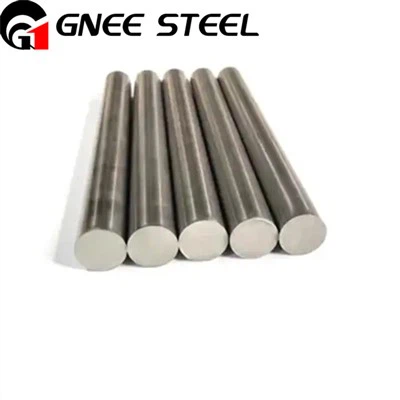
Hey there! As a supplier of Incoloy Alloy, I've been keeping a close eye on the research hotspots in this field. Incoloy alloys are super versatile and have a wide range of applications, from aerospace to chemical processing. So, let's dive into what's currently trending in Incoloy Alloy research.
1. High - Temperature Performance Enhancement
One of the major research hotspots is improving the high - temperature performance of Incoloy alloys. These alloys are often used in environments where they're exposed to extremely high temperatures, like in jet engines and power plants. Scientists are looking at ways to increase the creep resistance and oxidation resistance of Incoloy alloys at elevated temperatures.
Creep is the slow deformation of a material under a constant load at high temperatures. By adding certain alloying elements or modifying the microstructure, researchers aim to reduce creep rates. For example, some studies have shown that adding small amounts of rare - earth elements can significantly improve the creep resistance of Incoloy alloys.
Oxidation resistance is also crucial. At high temperatures, the surface of the alloy can react with oxygen in the air, forming oxide layers that can degrade the material's properties. New surface treatments and alloy compositions are being explored to form more stable and protective oxide layers. This not only extends the lifespan of the alloy but also maintains its performance in high - temperature environments. If you're interested in high - temperature resistant Incoloy alloys, check out our High Temperature Resistance Excellent Corrosion 800, 800h, 800ht, 825, 925 Incoloy.
2. Corrosion Resistance in Harsh Environments
Incoloy alloys are well - known for their corrosion resistance, but there's always room for improvement, especially in harsh chemical environments. Research is focused on understanding the corrosion mechanisms of Incoloy alloys in different media, such as acidic, alkaline, and chloride - containing solutions.
For instance, in the oil and gas industry, Incoloy alloys are used in pipelines and equipment that come into contact with corrosive substances like hydrogen sulfide and brine. By studying how the alloy reacts with these substances at a microscopic level, researchers can develop new alloys or coatings that offer better protection.
Some studies are also looking at the use of nanotechnology to enhance corrosion resistance. Nanocoatings can provide a more uniform and dense protective layer on the surface of the alloy, preventing corrosive agents from reaching the base material. Our Custom N08825 Alloy Strip For Jet Engine Parts Incoloy 825 Coil is designed to have excellent corrosion resistance in demanding applications.
3. Additive Manufacturing of Incoloy Alloys
Additive manufacturing, also known as 3D printing, is revolutionizing the manufacturing industry, and Incoloy alloys are no exception. This technology allows for the creation of complex geometries that are difficult or impossible to achieve with traditional manufacturing methods.
However, there are still some challenges in 3D printing Incoloy alloys. The rapid heating and cooling processes during 3D printing can lead to the formation of defects such as porosity and cracks in the printed parts. Researchers are working on optimizing the printing parameters, such as laser power, scanning speed, and powder characteristics, to produce high - quality Incoloy alloy parts.
Another aspect of research is the development of new 3D printable Incoloy alloy formulations. These new alloys need to have good flowability in the powder form and excellent mechanical properties after printing. The ability to 3D print Incoloy alloys opens up new possibilities for the design and production of components in various industries, including aerospace and medical.
4. Microstructure Control for Improved Properties
The microstructure of an Incoloy alloy has a significant impact on its mechanical, thermal, and chemical properties. Research is focused on controlling the microstructure through heat treatment, alloying, and processing techniques.
For example, by carefully controlling the cooling rate during heat treatment, the size and distribution of precipitates in the alloy can be adjusted. These precipitates can strengthen the alloy and improve its mechanical properties, such as hardness and toughness.


Alloying elements also play a crucial role in microstructure control. Different elements can form different phases in the alloy, which in turn affect its properties. By understanding the phase diagrams and the interactions between different elements, researchers can design alloys with tailored microstructures for specific applications.
5. Applications in Emerging Industries
Incoloy alloys are finding new applications in emerging industries. One such industry is renewable energy, specifically in solar power and energy storage systems. In solar power plants, Incoloy alloys can be used in components that are exposed to high temperatures and corrosive environments, such as heat exchangers and piping.
In energy storage systems, like batteries, Incoloy alloys can be used as electrodes or structural components due to their excellent corrosion resistance and electrical conductivity.
The medical industry is also showing interest in Incoloy alloys. Their biocompatibility and corrosion resistance make them suitable for use in medical implants and devices. Research is ongoing to develop Incoloy alloys that are even more compatible with the human body and have better long - term performance.
6. Recycling and Sustainability
As the demand for Incoloy alloys increases, so does the need for sustainable practices. Recycling of Incoloy alloys is becoming an important research area. Recycling not only reduces the consumption of raw materials but also decreases the environmental impact associated with mining and alloy production.
Researchers are working on developing efficient recycling processes for Incoloy alloys. This includes separating the alloy from other materials, removing impurities, and re - melting the alloy to produce new products. By improving the recycling rate of Incoloy alloys, we can create a more circular economy for these valuable materials.
Conclusion
The Incoloy Alloy field is full of exciting research hotspots. From improving high - temperature performance and corrosion resistance to exploring new manufacturing methods and applications, there's a lot happening. As a supplier, we're committed to staying at the forefront of these developments and providing our customers with the best Incoloy alloy products.
If you're in the market for Incoloy alloys or have specific requirements for your projects, we'd love to talk to you. Whether it's our High Temperature Resistance Excellent Corrosion 800, 800h, 800ht, 825, 925 Incoloy, Incoloy A - 286 Round Bar, or Custom N08825 Alloy Strip For Jet Engine Parts Incoloy 825 Coil, we can offer high - quality solutions. Feel free to reach out and start a conversation about your procurement needs.
References
- Smith, J. (2020). "Advances in High - Temperature Incoloy Alloys". Journal of Materials Science.
- Johnson, M. (2021). "Corrosion Resistance of Incoloy Alloys in Harsh Chemical Environments". Corrosion Science.
- Brown, K. (2022). "Additive Manufacturing of Incoloy Alloys: Challenges and Opportunities". Manufacturing Technology Review.