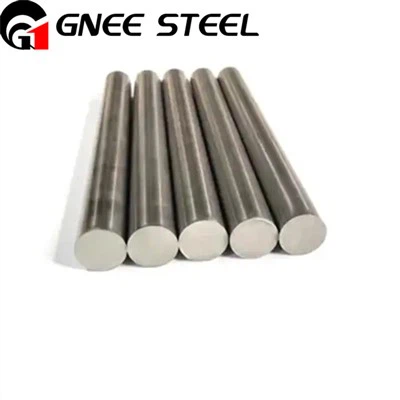
As a seasoned supplier of Incoloy Alloy, I understand the paramount importance of ensuring the quality of our products. Incoloy alloys are widely used in various industries due to their excellent corrosion resistance, high-temperature strength, and other remarkable properties. However, to guarantee that these alloys meet the required standards and perform optimally in different applications, thorough quality testing is essential. In this blog post, I will share some key methods and considerations for testing the quality of Incoloy Alloy.
Chemical Composition Analysis
One of the fundamental steps in testing the quality of Incoloy Alloy is to analyze its chemical composition. The precise chemical makeup of an alloy determines its properties and performance. For Incoloy alloys, elements such as nickel, chromium, iron, and molybdenum play crucial roles.
There are several techniques available for chemical composition analysis. One commonly used method is spectroscopy, which includes optical emission spectroscopy (OES) and X-ray fluorescence (XRF). OES is a highly accurate technique that can analyze a wide range of elements in the alloy. It works by exciting the atoms in the sample and measuring the emitted light at specific wavelengths to determine the elemental composition. XRF, on the other hand, is a non-destructive method that uses X-rays to stimulate the emission of characteristic X-rays from the elements in the sample. This method is relatively fast and can provide a quick analysis of the alloy's composition.
By comparing the analyzed chemical composition with the specified standards for the particular Incoloy Alloy grade, we can ensure that the product meets the required specifications. For example, Nickel Alloy Incoloy 926 UNS N08926 has specific limits for the content of nickel, chromium, molybdenum, and other elements. Any deviation from these limits can affect the alloy's corrosion resistance and other properties.
Mechanical Property Testing
Mechanical properties are another critical aspect of Incoloy Alloy quality. These properties include tensile strength, yield strength, elongation, hardness, and impact toughness. Tensile testing is one of the most common methods for evaluating the mechanical properties of an alloy. In a tensile test, a sample of the alloy is subjected to a gradually increasing tensile force until it breaks. The test measures the maximum load the sample can withstand (tensile strength) and the amount of deformation it undergoes before breaking (elongation).
Yield strength is the stress at which the alloy begins to deform plastically. It is an important property as it indicates the maximum stress the alloy can withstand without permanent deformation. Hardness testing, on the other hand, measures the resistance of the alloy to indentation or scratching. There are several hardness testing methods available, such as the Brinell, Rockwell, and Vickers hardness tests. Each method has its own advantages and is suitable for different types of materials and applications.
Impact toughness is the ability of the alloy to absorb energy and resist fracture under impact loading. This property is particularly important in applications where the alloy may be subjected to sudden or dynamic loads. Charpy impact testing is a standard method for measuring the impact toughness of an alloy. In this test, a notched sample is struck by a pendulum, and the energy absorbed during the fracture is measured.


For Incoloy 800HT Round Bars UNS N08811, specific mechanical property requirements are defined to ensure its performance in high-temperature applications. By conducting comprehensive mechanical property testing, we can verify that the alloy meets these requirements and is suitable for its intended use.
Corrosion Resistance Testing
Incoloy alloys are known for their excellent corrosion resistance, which makes them suitable for use in harsh environments such as chemical processing plants, oil and gas industries, and marine applications. Therefore, corrosion resistance testing is a crucial part of the quality assessment process.
There are several types of corrosion resistance tests, including immersion tests, salt spray tests, and electrochemical tests. Immersion tests involve immersing the alloy sample in a corrosive medium for a specified period of time and then evaluating the extent of corrosion. Salt spray tests are commonly used to simulate the corrosive effects of a marine environment. In this test, the sample is exposed to a salt mist for a certain duration, and the corrosion rate is measured.
Electrochemical tests, such as potentiodynamic polarization and electrochemical impedance spectroscopy (EIS), provide more detailed information about the corrosion behavior of the alloy. Potentiodynamic polarization measures the current flowing through the alloy as a function of the applied potential, which can be used to determine the corrosion rate and the passive behavior of the alloy. EIS, on the other hand, measures the impedance of the alloy at different frequencies, which can provide information about the corrosion mechanism and the protective properties of the oxide film on the alloy surface.
The corrosion resistance requirements for UNS S66286 are specific to its application. By conducting appropriate corrosion resistance tests, we can ensure that the alloy can withstand the corrosive conditions it will encounter in service.
Microstructural Analysis
Microstructural analysis is another important aspect of Incoloy Alloy quality testing. The microstructure of an alloy refers to the arrangement and distribution of its phases and grains. It has a significant impact on the alloy's mechanical properties, corrosion resistance, and other performance characteristics.
Metallographic examination is a common method for microstructural analysis. In this method, a sample of the alloy is polished and etched to reveal its microstructure under a microscope. The examination can reveal the presence of different phases, grain size, and any defects such as inclusions or porosity.
For example, a fine-grained microstructure generally provides better mechanical properties and corrosion resistance compared to a coarse-grained microstructure. By analyzing the microstructure of the Incoloy Alloy, we can ensure that it meets the required standards and is suitable for its intended application.
Non-Destructive Testing
Non-destructive testing (NDT) methods are used to detect internal defects in the Incoloy Alloy without damaging the material. These methods are particularly useful for ensuring the integrity of the alloy in applications where the presence of defects can lead to catastrophic failures.
Some common NDT methods include ultrasonic testing, radiographic testing, magnetic particle testing, and liquid penetrant testing. Ultrasonic testing uses high-frequency sound waves to detect internal defects such as cracks, voids, or inclusions. Radiographic testing, on the other hand, uses X-rays or gamma rays to produce an image of the internal structure of the alloy. Magnetic particle testing is used to detect surface and near-surface defects in ferromagnetic materials, while liquid penetrant testing is used to detect surface defects in non-porous materials.
By using NDT methods, we can identify any potential defects in the Incoloy Alloy and take appropriate measures to ensure its quality and reliability.
Conclusion
Testing the quality of Incoloy Alloy is a comprehensive process that involves multiple methods and considerations. By conducting chemical composition analysis, mechanical property testing, corrosion resistance testing, microstructural analysis, and non-destructive testing, we can ensure that our Incoloy Alloy products meet the required standards and perform optimally in different applications.
As a trusted supplier of Incoloy Alloy, we are committed to providing high-quality products that meet the strictest quality control standards. If you are in the market for Incoloy Alloy and are interested in learning more about our products or discussing your specific requirements, please feel free to reach out to us. We look forward to the opportunity to work with you and provide you with the best Incoloy Alloy solutions for your needs.
References
- ASM Handbook Volume 3: Alloy Phase Diagrams. ASM International.
- ASTM Standards for Metallic Materials. ASTM International.
- Corrosion Testing and Evaluation: Experimental Design and Statistical Analysis. ASTM International.