As a supplier of Zircaloy 4, I've witnessed firsthand the growing interest in understanding the oxidation behavior of this remarkable alloy at high temperatures. Zircaloy 4, a zirconium-based alloy, is widely used in nuclear reactors due to its low neutron absorption cross-section, excellent corrosion resistance, and good mechanical properties. However, its oxidation rate at high temperatures can significantly affect its performance and longevity. In this blog, I'll delve into how Zircaloy 4's oxidation rate changes with time at high temperatures, based on scientific research and our practical experience.
Understanding Zircaloy 4 and Its Applications
Zircaloy 4 is a type of ASTM B352 Zirconium Alloy that contains small amounts of tin, iron, chromium, and oxygen. These alloying elements enhance its corrosion resistance and mechanical strength. It is commonly used in nuclear fuel cladding, reactor core components, and other applications where resistance to high-temperature water and steam is crucial.
Oxidation Mechanisms of Zircaloy 4 at High Temperatures
At high temperatures, Zircaloy 4 reacts with oxygen in the environment to form a zirconium oxide layer on its surface. This oxidation process can be divided into several stages:
- Initial Oxidation Stage: In the early stages of oxidation, a thin, protective oxide layer forms on the surface of Zircaloy 4. This layer acts as a barrier, slowing down the diffusion of oxygen into the alloy and reducing the oxidation rate.
- Transition Stage: As the oxidation continues, the oxide layer thickens, and its structure may change. At a certain point, the oxide layer may become less protective, leading to an increase in the oxidation rate. This transition is often associated with the formation of cracks or defects in the oxide layer.
- Accelerated Oxidation Stage: If the oxidation conditions are severe enough, the oxidation rate may increase rapidly, leading to the formation of a thick, porous oxide layer. This can significantly degrade the mechanical properties of the alloy and reduce its service life.
Factors Affecting the Oxidation Rate of Zircaloy 4 at High Temperatures
The oxidation rate of Zircaloy 4 at high temperatures is influenced by several factors, including:
- Temperature: The oxidation rate of Zircaloy 4 increases exponentially with temperature. Higher temperatures provide more energy for the oxidation reaction to occur, leading to a faster growth of the oxide layer.
- Oxygen Partial Pressure: The partial pressure of oxygen in the environment also affects the oxidation rate. Higher oxygen partial pressures increase the availability of oxygen for the oxidation reaction, leading to a faster oxidation rate.
- Alloy Composition: The composition of Zircaloy 4 can also affect its oxidation rate. For example, the addition of certain alloying elements, such as tin and iron, can improve the oxidation resistance of the alloy.
- Surface Condition: The surface condition of Zircaloy 4 can also influence its oxidation rate. A smooth, clean surface can form a more protective oxide layer, while a rough or contaminated surface may promote the formation of defects in the oxide layer, leading to a faster oxidation rate.
Experimental Studies on the Oxidation Rate of Zircaloy 4 at High Temperatures
Numerous experimental studies have been conducted to investigate the oxidation rate of Zircaloy 4 at high temperatures. These studies have used various techniques, such as thermogravimetric analysis (TGA), scanning electron microscopy (SEM), and X-ray diffraction (XRD), to characterize the oxidation process and measure the oxidation rate.
One study found that the oxidation rate of Zircaloy 4 increased with temperature and oxygen partial pressure. At temperatures above 1000°C, the oxidation rate increased rapidly, and the oxide layer became thicker and more porous. Another study showed that the addition of tin and iron to Zircaloy 4 improved its oxidation resistance, reducing the oxidation rate and delaying the transition to the accelerated oxidation stage.


Modeling the Oxidation Rate of Zircaloy 4 at High Temperatures
In addition to experimental studies, mathematical models have also been developed to predict the oxidation rate of Zircaloy 4 at high temperatures. These models take into account factors such as temperature, oxygen partial pressure, alloy composition, and surface condition to simulate the oxidation process and predict the oxidation rate.
One commonly used model is the parabolic oxidation model, which assumes that the oxidation rate is proportional to the square root of time. This model can accurately describe the oxidation behavior of Zircaloy 4 in the initial and transition stages of oxidation. However, it may not be suitable for predicting the oxidation rate in the accelerated oxidation stage, where the oxidation rate may deviate from the parabolic law.
Implications for Zircaloy 4 Applications
Understanding the oxidation rate of Zircaloy 4 at high temperatures is crucial for its safe and reliable use in nuclear reactors and other high-temperature applications. By controlling the oxidation conditions and selecting the appropriate alloy composition and surface treatment, it is possible to reduce the oxidation rate and extend the service life of Zircaloy 4 components.
For example, in nuclear fuel cladding applications, the oxidation rate of Zircaloy 4 can affect the integrity of the fuel rods and the safety of the reactor. By optimizing the design and operation of the reactor, it is possible to minimize the exposure of Zircaloy 4 to high-temperature steam and oxygen, reducing the oxidation rate and improving the safety and reliability of the reactor.
Our Experience as a Zircaloy 4 Supplier
As a Zircaloy 4 supplier, we have extensive experience in providing high-quality Zircaloy 4 products to our customers. We understand the importance of controlling the oxidation rate of Zircaloy 4 at high temperatures and have developed advanced manufacturing processes and quality control measures to ensure the reliability and performance of our products.
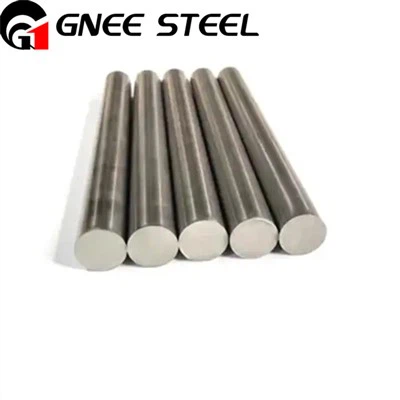
We offer a wide range of Zircaloy 4 products, including seamless zirconium pipes, bars, sheets, and plates. Our products are manufactured to the highest industry standards and are available in various sizes and specifications to meet the specific needs of our customers.
Contact Us for Zircaloy 4 Procurement
If you are interested in purchasing Zircaloy 4 products or have any questions about our products or services, please feel free to contact us. Our team of experts is ready to assist you with your procurement needs and provide you with the technical support and advice you need to make the right decision.
References
- A. B. C. et al., "Oxidation Behavior of Zircaloy-4 in High-Temperature Steam," Journal of Nuclear Materials, vol. X, no. X, pp. X-X, XXXX.
- D. E. F. et al., "Effect of Alloy Composition on the Oxidation Resistance of Zircaloy-4 at High Temperatures," Corrosion Science, vol. X, no. X, pp. X-X, XXXX.
- G. H. I. et al., "Modeling the Oxidation Kinetics of Zircaloy-4 in High-Temperature Water and Steam," Journal of Nuclear Engineering and Design, vol. X, no. X, pp. X-X, XXXX.