Monel 400 alloy (UNS N04400) is a nickel-copper solid-solution-strengthened alloy that offers high strength over a wide temperature range and can be strengthened only by cold working. The alloy shows excellent corrosion resistance in mildly oxidizing, neutral, and moderately reducing environments, and remains stable in marine environments and various non-oxidizing chloride solutions.
It is one of the earliest nickel-based alloys to be applied at industrial scale, with a history that traces back to the native nickel-copper ores of late-19th-century Canada - its composition closely matches that of the original ore. Like commercially pure nickel, the alloy has relatively low strength in the annealed condition, and its strength can be raised through a variety of tempers.
Monel 400 Alloy Applicable Standards
| Product Form | ASTM Standard | ASME Standard | AMS Standard | Military Standard |
|---|---|---|---|---|
| Plate, sheet and strip | B 127 | SB 127 | 4544 | QQ-N-281 |
| Seamless pipe and tube | B 163 / B 165 | SB 163 / SB 165 | 4574 | MIL-T-1368 / MIL-T-23520 |
| Bar and forgings | B 164 / B 564 | SB 164 / SB 564 | 4675 | MIL-T-24106 / QQ-N-281 |
| Wire | - | - | 4730 / 4731 | QQ-N-281 |
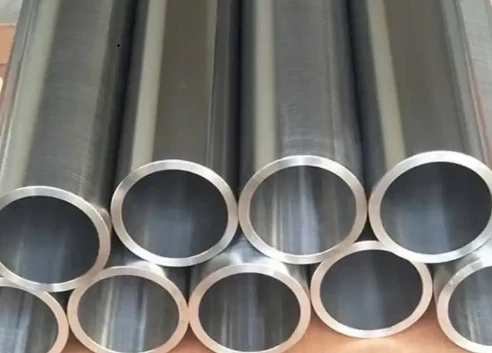
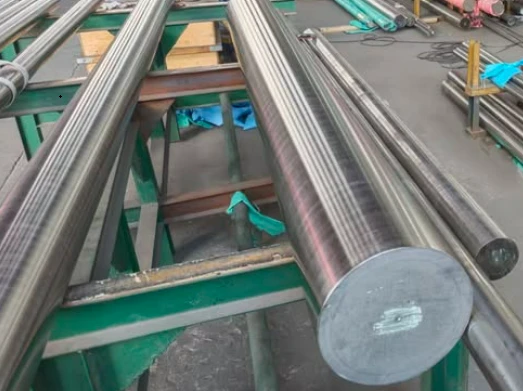
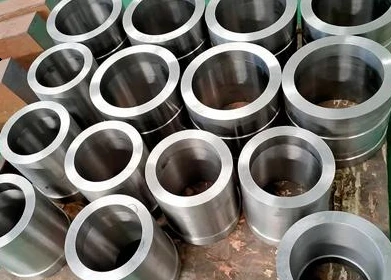
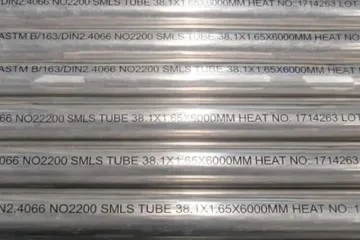
GNEE provides diversified Monel 400 (UNS N04400) products including plate, sheet, tube, pipe, bar and forgings according to relevant ASTM specifications. In‑stock standard sizes and custom‑to‑draw processing services are available. All goods come with complete EN 10204 3.1 test documents. Contact us for your project quotation.

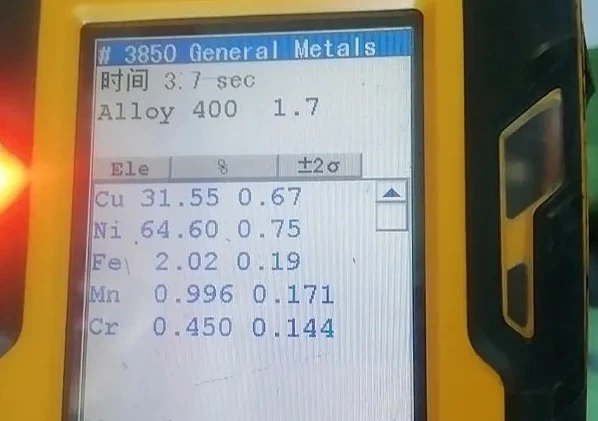
Monel 400 Alloy Chemical Composition (wt %)
| Element | C | Mn | S | Si | Cu | Ni + Co | Fe | Al | P |
|---|---|---|---|---|---|---|---|---|---|
| Limit | ≤ 0.10 | ≤ 0.50 | ≤ 0.005 | ≤ 0.25 | 28.0–34.0 | ≥ 63.00 | ≤ 2.50 | ≤ 0.02 | ≤ 0.005 |
Monel 400 Alloy Mechanical Properties
Typical Tensile Properties at Room Temperature
| Condition | 0.2% Yield Strength | Tensile Strength | Elongation After Fracture | Elastic Modulus |
|---|---|---|---|---|
| Annealed | 35,000 psi (240 MPa) | 75,000 psi (520 MPa) | 45% | 26 × 10⁶ psi (180 GPa) |
| Hot-rolled | 45,000 psi (310 MPa) | 80,000 psi (550 MPa) | 30% | 26 × 10⁶ psi (180 GPa) |
Short-Time Tensile Properties at Elevated Temperature
| Temperature | 0.2% Yield Strength | Tensile Strength | Elongation After Fracture |
|---|---|---|---|
| 70°F (21 °C) | 31,000 psi (215 MPa) | 82,000 psi (565 MPa) | 48% |
| 200°F (93 °C) | 30,000 psi (205 MPa) | 80,000 psi (550 MPa) | 47% |
| 400°F (204 °C) | 26,000 psi (180 MPa) | 75,000 psi (520 MPa) | 45% |
| 600°F (316 °C) | 25,000 psi (175 MPa) | 73,000 psi (505 MPa) | 46% |
| 800°F (427 °C) | 23,000 psi (160 MPa) | 70,000 psi (480 MPa) | 48% |
| 1000°F (538 °C) | 21,000 psi (145 MPa) | 53,000 psi (370 MPa) | 40% |
Monel 400 Alloy Physical Properties
| Property | Value |
|---|---|
| Density | 0.318 lb/in³ (8.80 g/cm³) |
| Magnetic permeability (at 75 °F, 200 oersteds) | 1.0002 |
| Specific heat | 0.10 Btu/lb·°F (430 J/kg·K) |
| Specific gravity | 8.83 |
| Melting range | 2370–2460°F (1300–1350 °C) |
Monel 400 Alloy Thermal and Electrical Properties
| Temperature | Mean Coefficient of Thermal Expansion (10⁻⁶ in/in·°F) | Thermal Conductivity (Btu/h·ft·°F / W/m·K) | Electrical Resistivity (Ω·cir·mil/ft / μΩ·m) |
|---|---|---|---|
| 70°F (21 °C) | 15.1 | 22.0 / 151 | 307 / 0.511 |
| 200°F (93 °C) | 7.7 | 24.0 / 167 | 322 / 0.537 |
| 400°F (204 °C) | 8.6 | 26.9 / 193 | 337 / 0.559 |
| 600°F (316 °C) | 8.8 | 30.1 / 215 | 346 / 0.574 |
| 800°F (427 °C) | 8.9 | 33.4 / 238 | 355 / 0.587 |
| 1000°F (538 °C) | 9.1 | 36.5 / 264 | 367 / 0.603 |
Monel 400 Alloy Corrosion Resistance
General Corrosion Resistance
Monel 400 alloy offers excellent corrosion resistance in a wide range of reducing media, and in oxidizing media it outperforms high-copper alloys. However, it cannot withstand strongly oxidizing acids (such as nitric and nitrous acids); such service calls for high-chromium stainless steels instead.
Suitable Media
The alloy is suitable for moderately reducing acids, neutral and alkaline solutions, various caustic liquors, salt solutions, organic media, and atmospheric environments. In hot, high-stress, high-concentration caustic liquors, caustic stress corrosion cracking may occur.
Key Advantages
The alloy delivers outstanding resistance to chloride stress corrosion cracking and remains stable in water environments such as seawater and brackish water. It will be attacked by sulfur-bearing gas above 371 °C and by molten sulfur above 260 °C.
Typical Corrosion Rates in Representative Media (mpy)
| Corrosive Medium | Temperature | Corrosion Rate |
|---|---|---|
| Acetic acid (all concentrations) | 70°F (21 °C) | < 4.00 |
| 4% NaOH caustic liquor | 68°F (20 °C) | 0.16 |
| 23% NaOH caustic liquor | 220°F (104 °C) | 0.20 |
| 50% NaOH caustic liquor | Boiling | < 1.00 |
| 5% sulfuric acid | 214°F (101 °C) | 3.40 |
| 1% hydrochloric acid (non-aerated) | Boiling | 42.00 |
Monel 400 Alloy Heat Treatment
Annealing
The typical annealing temperature is 1400–1800°F (760–980 °C) with a short soak, to soften the material after forming while retaining a fine grain structure. The annealing atmosphere should be kept as free of sulfur compounds as possible, since sulfur causes embrittlement of the material within the annealing temperature range.
Stress Relieving
Cold-worked parts may be heated to 575°F (300 °C) and held for 1–3 hours to relieve stress.
As-Delivered Use
In most applications the alloy can be placed into service without a final heat treatment, thereby retaining higher material strength.
Monel 400 Alloy Forming and Fabrication
Cold Forming
Cold-forming performance is excellent, with a work-hardening rate lower than that of 301 and 304 stainless steels. The alloy can be used in multiple successive deep-drawing operations, and tolerates greater deformation between anneals.
Hot Forming
Hot-forming resistance is lower than that of most steels, and the alloy can be hot-formed into virtually any shape. Hot-forming temperature range: 1200–2150°F.
Heavy reductions: recommended temperature 1700–2150°F;
Light reductions: temperature may be as low as 1200°F. Low-temperature hot forming yields higher mechanical properties and a finer grain structure; prolonged soaking at hot-forming temperatures is strictly prohibited, and the working temperature must never exceed 2150°F, to avoid permanent damage to the material.
Monel 400 Alloy Welding
Suitable welding processes: GTAW (gas tungsten arc welding), GMAW (gas metal arc welding), and SMAW (shielded metal arc welding).
Before welding, the joint area must be thoroughly cleaned of lubricants, paint, scale, and other contaminants, which would embrittle the weld.
The welding practice is similar to that for austenitic stainless steels, with no preheat and no post-weld heat treatment required. Joint design must accommodate the alloy's sluggish molten-metal fluidity and provide sufficient space for filler metal.
Owing to its high thermal conductivity and high purity, the alloy exhibits shallower weld penetration than austenitic stainless steels; welding parameters should be adjusted accordingly.
GNEE PIPE specializes in the supply of nickel-copper and other specialty alloys, offering Monel 400 (UNS N04400) plate, seamless pipe and tube, bar, forgings and wire with mill quality certificates and full-size inventory. Contact us anytime for quotations and technical support.
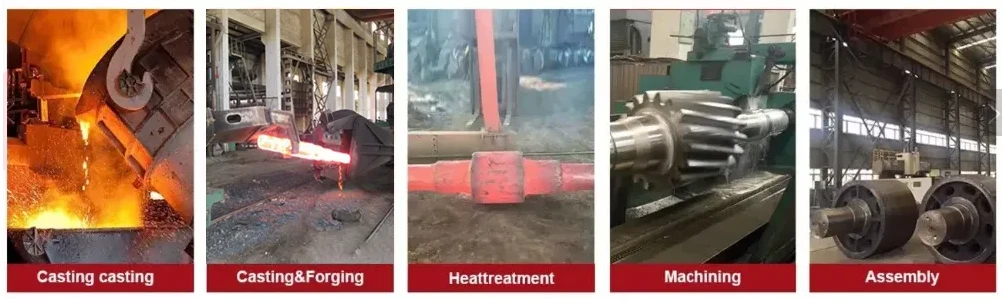
Monel 400 Alloy Core Application Fields
- Valves, pump bodies and pump shafts, propeller shafts
- Marine engineering components, fasteners
- Chemical processing equipment
- Gasoline and freshwater storage tanks
- Crude-oil distillation equipment
- Process vessels, piping systems
- Boiler feedwater heaters
- Heat exchangers

Contact us now for the latest pricing on Monel 400 alloy.
FAQ:
What ASTM Standards Apply to Monel 400 Plate, Tube, Bar and Forgings?
Different Monel 400 product forms are covered by different ASTM standards. ASTM B127 applies to plate, sheet and strip; ASTM B163 and B165 cover specified seamless tube and pipe products; ASTM B164 applies to bar and rod; and ASTM B564 covers applicable nickel alloy forgings. Buyers should confirm the product form, dimensions and required specification before placing an order.
Is Monel 400 Suitable for All Acidic Environments?
No. Monel 400 performs well in many reducing acids, alkaline solutions, salt solutions and non-oxidizing chloride environments. However, it is not suitable for strongly oxidizing acids such as nitric acid. Its corrosion resistance also depends on acid concentration, temperature, aeration and impurities. Buyers should evaluate the actual process medium before selecting the alloy.
What Is the Difference Between Annealed and Hot-Rolled Monel 400?
Annealed Monel 400 generally has lower yield strength and higher elongation, making it suitable for applications requiring greater ductility and forming flexibility. Hot-rolled material typically has higher strength but lower elongation. For reference, typical room-temperature tensile data show approximately 240 MPa yield strength and 45% elongation for annealed material, compared with 310 MPa and 30% for hot-rolled material. Actual values depend on product form and applicable specifications.
Can Monel 400 Be Cold-Formed, Hot-Formed and Welded?
Yes. Monel 400 has good cold-forming and hot-forming characteristics and can be welded using processes such as GTAW, GMAW and SMAW. However, cold working increases its strength and hardness, while hot forming requires controlled temperatures to avoid material damage. Before welding, the joint area must be thoroughly cleaned to prevent contamination and weld defects.
Does Monel 400 Require Heat Treatment Before Delivery?
Not always. Monel 400 is a solid-solution alloy that cannot be strengthened by conventional precipitation hardening. Annealing is generally used to soften cold-worked material and restore ductility, while stress relieving may be considered for certain cold-worked components. Many applications can use the alloy in its specified as-delivered condition without additional heat treatment. Buyers should confirm the required condition and mechanical properties in the purchase specification.