Nickel alloy forgings are widely used in aerospace, gas turbines, oil and gas, chemical processing, power generation and marine engineering. These industries require components that can withstand elevated temperatures, mechanical loads, pressure or corrosive environments. Common forged products include rings, discs, shafts, flanges, bars and custom-shaped components.
The appropriate alloy and forging process depend on the component's operating temperature, pressure, loading conditions, corrosive media, design requirements and applicable material specifications. Inconel 718, Inconel 625, Hastelloy C-276 and Monel 400 are among the nickel-based alloys considered for different service conditions. The correct grade must be selected according to the actual application rather than the industry name alone.
GNEE supplies nickel alloy forgings of multiple grades, including Inconel, Incoloy, Hastelloy, Monel, Nickel 200/201 and GH series superalloys. Our product range covers forged bars, forged rings, forged discs, forged hollow bars, forged blocks, forged gear blanks, forged shafts and forged flanges. Below is the detailed introduction of application scenarios for each forging shape.
Major Industrial Applications of Nickel Alloy Forgings

Nickel Alloy Forged Bar
Forged bar is the most versatile basic forging blank with uniform grain structure and minimal property anisotropy. It can be turned and milled into rotary and special-shaped components.
Key Applications
- High-temperature fasteners for chemical industry: high-temperature bolts, studs, nuts and valve stems for acetic acid, chlor-alkali and hydrogenation units with combined corrosion and high temperature;
- Downhole oil & gas parts: downhole tool mandrels, plugs and connectors for H₂S and CO₂ corrosion environment;
- Heat treatment tooling: pins, locating pins and hangers for furnace fixtures;
- Aerospace and power equipment: small high-temperature load-bearing pins and sensor bases;
- General non-standard machined parts and test sample blanks.
Advantage: Flexible cut-to-size service, suitable for small trial orders and mass projects.
Nickel Alloy Forged Ring (Rolled Ring)
Metal flow lines run circumferentially for rolled rings, providing excellent hoop strength to withstand cyclic alternating loads. It is one of the most common ring components for pressure vessels and reactors.
Key Applications
- Chemical reactors: reactor sealing rings, shell flange rings and inner support rings;
- Heat treatment industry: furnace roller support rings, quenching fixture rings and vacuum furnace sealing rings;
- Oil & gas equipment: wellhead sealing rings, valve body lining rings and pipe transition rings;
- Nuclear power equipment: core support rings, shielding rings and pressure sealing rings;
- Bearing & transmission parts: high-temperature bearing races and wear-resistant liner rings;
- Aero-engine components: casing segments and combustion chamber load rings.
Advantage: Seamless one-piece ring, eliminating failure risk from welding joints under high pressure and cyclic temperature.
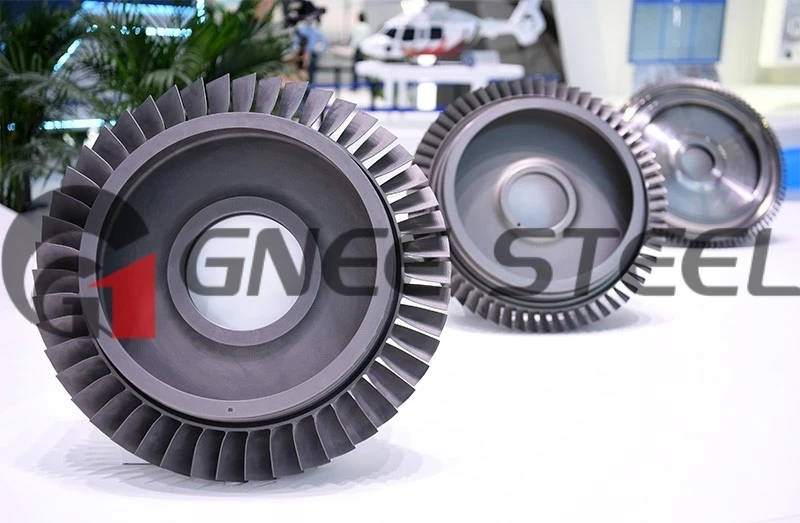
Nickel Alloy Forged Disc
Forged discs are formed by upsetting with strong through-thickness bearing capacity and flat end faces, ideal for end sealing and pressure-bearing components without welded plate splicing.
Key Applications
- Pressure vessels: end caps, blind flanges and head blanks;
- Heat exchangers: tube sheet blanks and separator plates for chloride corrosion service;
- Valve components: valve plates, valve covers and throttle plates;
- Vacuum equipment: vacuum chamber end plates and sight flange base plates;
- Autoclave test covers for high-pressure corrosion tests.
Advantage: Even machining allowance on end faces, good flatness after processing for sealing and pressure-bearing plate parts.
Nickel Alloy Forged Hollow Bar
Hollow bars are mandrel-forged with continuous flow lines on inner and outer walls. Compared with seamless heavy-wall tubes, they support heavier single-piece weight and flexible wall thickness design for sleeve-type rotary parts.
Key Applications
- High-temperature liners: agitator shaft sleeves and pump isolation sleeves;
- Pipe transition components: high-temperature reducer sleeves and reactor thimbles;
- Oil & gas wellheads: downhole isolation sleeves and anti-corrosion protective sleeves;
- Heat treatment furnaces: radiant tube sleeves and heating element protection sleeves;
- High-pressure hydraulic parts: cylinder blanks for high-temperature corrosion service.
Advantage: Integrally forged inner and outer wall; customizable wall thickness, better resistance to internal pressure and medium penetration than pipe.
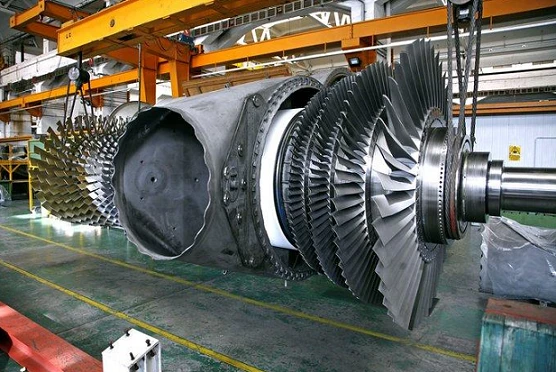
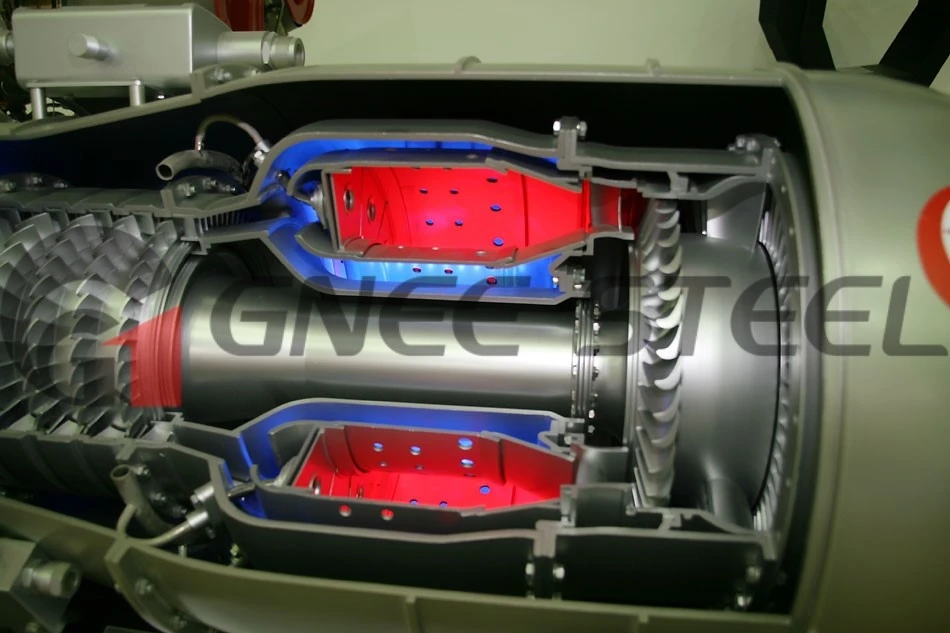
Nickel Alloy Forged Block
Rectangular open-die blocks have balanced mechanical properties in all three directions, perfect for milling and planing non-rotary special-shaped parts with less material waste.
Key Applications
- Heat treatment tooling: furnace support blocks, fixture bases and positioning pedestals;
- Mould industry: hot forming mould base and hot stamping mould inserts;
- Chemical equipment: non-standard support brackets and anti-corrosion mounting bases;
- Test benches: corrosion test stand bases and fixture bodies;
- Non-standard load-bearing parts for nuclear and aerospace projects.
Advantage: Optimized for non-round irregular parts, higher material utilization for multi-face machining.
Nickel Alloy Forged Gear Blank
Gear blanks reserve hobbing allowance and keep intact metal flow lines at tooth root, avoiding fatigue crack propagation caused by cutting gears directly from plates, specially designed for high-temperature transmission systems.
Key Applications
- Chemical stirring systems: gears for high-temperature agitator gearboxes;
- Downhole oil & gas transmission: gear blanks for downhole reduction mechanisms;
- Heat treatment conveying lines: drive gears for furnace rollers;
- Energy recovery equipment: transmission pairs for flue gas waste heat units;
- Marine equipment: corrosion-resistant transmission gears for seawater service.
Advantage: Unbroken flow lines at tooth root, outstanding anti-fatigue and anti-pitting performance for long service life under high-temperature corrosion.
Nickel Alloy Forged Shaft
Long forged shafts are produced by drawing forging with continuous axial flow lines, delivering excellent bending and torsion resistance for rotating power components.
Key Applications
- Chemical reactors: agitator main shafts and blade connecting shafts;
- Pump industry: high-temperature chemical pump shafts and corrosion-resistant pump spindles;
- Heat treatment equipment: furnace roller shafts and conveying roller mandrels;
- Oil & gas equipment: downhole stirring shafts and screw pump drive shafts;
- Flue gas treatment: high-temperature corrosion-resistant fan drive shafts.
Advantage: Continuous axial grain flow, high resistance to torsion fracture under continuous rotating operation.
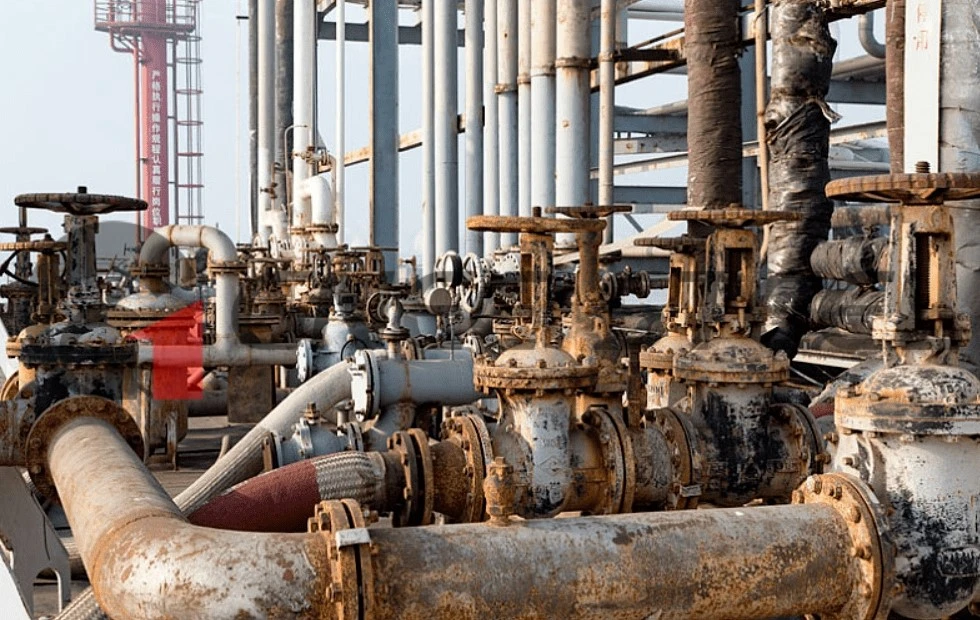
Nickel Alloy Forged Flange
One-piece forged flanges contain no weld seams from plate cutting, offering stable pressure resistance and complying with ASME codes for pressure piping. They are core connecting components for high-temperature corrosive pipelines.
Key Applications
- Chemical pipelines: flanges for hydrogenation, chlor-alkali and acetic acid high-temperature corrosive lines;
- Pressure vessels: nozzle flanges and heat exchanger channel flanges;
- Oil & gas wellheads: high-pressure wellhead flanges and christmas tree connection flanges;
- Nuclear piping: secondary & tertiary nuclear process piping flanges;
- Vacuum & heat treatment furnaces: chamber connecting flanges and atmosphere furnace sealing flanges.
Advantage: Zero weld risk, suitable for pipelines carrying toxic, flammable, high-temperature and high-pressure media.
Common Nickel Alloy Forging Types and Their Applications
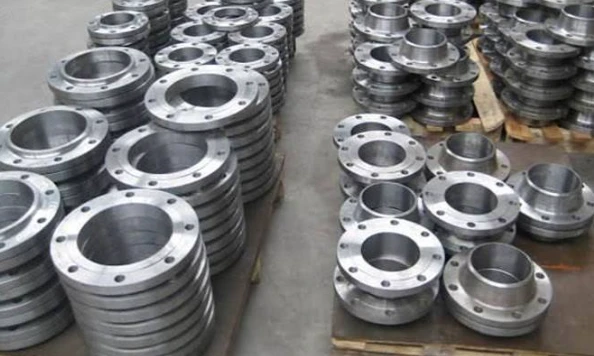
Nickel alloy forgings are manufactured in different shapes to meet component design and loading requirements. The required shape, dimensions and machining allowance should be confirmed before production.
| Forging Type | Typical Applications | Related Product Keywords |
|---|---|---|
| Forged Rings | Turbine rings, flanges, pressure equipment | Nickel Alloy Forged Rings |
| Forged Discs | Turbine discs, compressor discs, rotor components | Inconel Forged Discs |
| Forged Shafts | Pump shafts, turbine shafts, drive components | Nickel Alloy Forged Shafts |
| Forged Flanges | Pipeline connections, valves, pressure systems | Nickel Alloy Forged Flanges |
| Forged Blocks | Valve bodies, machinery parts, custom components | Nickel Alloy Forged Blocks |
| Forged Bars | Fasteners, shafts and machined components | Nickel Alloy Forged Bars |
The forging shape is determined by the component's geometry, load direction, required material properties and machining plan. For example, a forged ring may reduce material waste when producing a ring-shaped component, while a forged disc may provide a suitable starting form for a rotating component.
How to Select Nickel Alloys for Different Applications?
Different nickel alloys are designed for different combinations of temperature, strength and corrosion resistance. The following table provides general material-selection references, not universal grade approvals.
| Application Requirement | Common Alloy Options | Main Selection Factors |
|---|---|---|
| High-temperature strength | Inconel 718, Waspaloy | Temperature, creep, fatigue and stress |
| Oxidation resistance | Inconel 600, 601, 625 | Temperature and operating atmosphere |
| Severe chemical corrosion | Hastelloy C-276, C-22 | Chemical composition, concentration and temperature |
| Seawater and marine service | Monel 400, Inconel 625 | Chloride exposure, flow and crevice conditions |
| Sour oil and gas service | Inconel 625, Alloy 925, C-276 | H₂S conditions, pH, temperature and applicable standards |
Before ordering, buyers should provide the operating medium, design temperature, pressure, mechanical loads and required service life. The final material should be confirmed against the design code, material specification and project requirements.
Nickel Alloy Forging Supply from GNEE
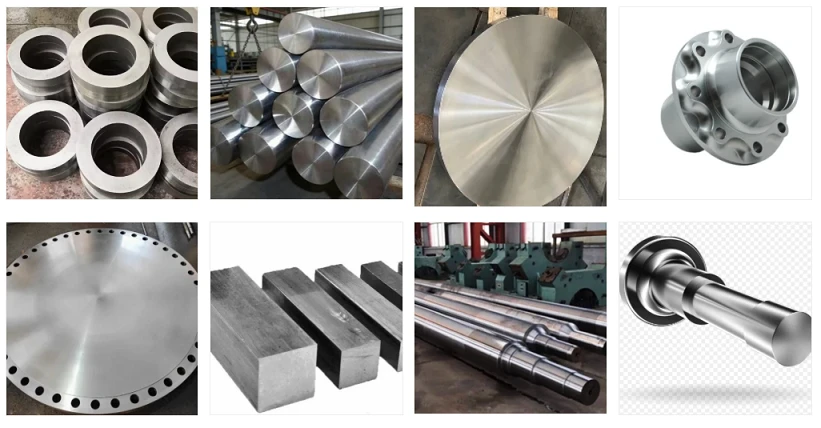
GNEE supplies nickel alloy forged products in grades such as Inconel 718, Inconel 625 and Hastelloy C-276. Available product forms can include forged rings, discs, bars, shafts, flanges, blocks and custom forgings, subject to grade, dimensions and production feasibility.
Depending on project requirements, supply can be discussed in as-forged, rough-machined or finish-machined conditions. Inspection, material certification, packing and delivery requirements should be confirmed against the purchase specification.
Looking for nickel alloy forgings for aerospace, oil and gas, chemical processing or power generation applications?
Send GNEE your alloy grade, product dimensions, applicable standard, quantity and technical drawing. We can review the requirements and prepare a quotation based on your project specifications.
FAQ:
What types of forgings can you produce?
We produce four main types: open die forgings (flanges, rings, discs, blocks, shafts up to 3,000 kg), closed die forgings (near-net-shape components up to 500 kg), ring rolled forgings (seamless rings up to 2,500 mm OD), and upset forgings. We also supply forged bars and step shafts.
Can you produce forgings to customer drawings?
Yes. We work from customer drawings, 3D models (STEP, IGES), or samples. Our engineering team reviews each drawing for forgeability and suggests modifications to optimize the forging process while meeting final dimensional and property requirements. Tooling for closed die forgings is designed in-house.
What heat treatment do you provide?
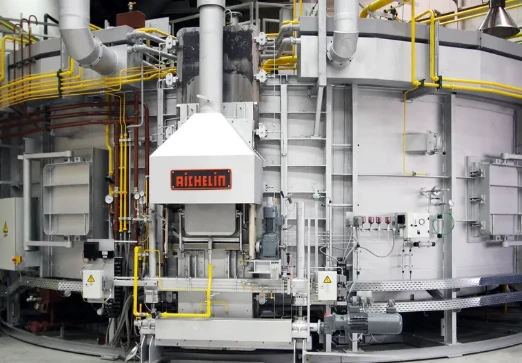
We provide complete heat treatment services: solution annealing (to dissolve precipitates and homogenize structure), aging/precipitation hardening (to achieve target strength), stress relieving (to reduce residual stresses after machining), and quenching. All heat treatment is performed in computer-controlled furnaces with temperature chart recordings.
Do you supply forgings with NACE MR0175 certification?
Yes. We can supply forgings certified to NACE MR0175/ISO 15156 for sour oil and gas service. This includes controlled hardness (typically HRC 22 maximum) and specific heat treatment requirements. NACE certification documentation is provided with the MTR.