Alloy 617 (commercial name Inconel® 617, corresponding to UNS N06617 / W.Nr. 2.4663) is a nickel-chromium-cobalt-molybdenum alloy strengthened through solid-solution hardening with cobalt (Co) and molybdenum (Mo), engineered to withstand high loads, complex stresses, and severely corrosive environments at extreme temperatures of up to 1100°C (short-term up to 1250°C).
Combining outstanding high-temperature strength, excellent oxidation and carburization resistance, good creep and rupture performance, and superior weldability in a single material, it is the material of first choice for advanced applications such as advanced power-generation systems (including high-temperature gas-cooled reactors), hot-section components of aerospace engines, industrial gas turbines, and high-temperature chemical-processing equipment.
Its unique combination of alloying elements ensures metallurgical stability under long-term high-temperature service, making it one of the key materials for meeting the challenges of future ultra-supercritical power generation and Generation IV nuclear systems.
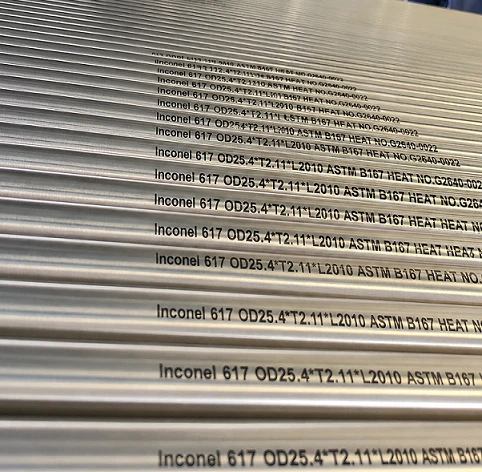
If you are sourcing reliable Alloy 617 (Inconel 617, UNS N06617) superalloy components for high-temperature reactor, gas turbine and thermal chemical projects, GNEE supplies a full portfolio of Inconel 617 product forms including tubes, sheets, plates, bars, forgings and flanges.
All materials follow strict melting standards with complete material traceability and test certification, available for custom machining to match your high-temperature critical service drawings and specifications.
Contact us for the latest export price quote for 617 Alloy
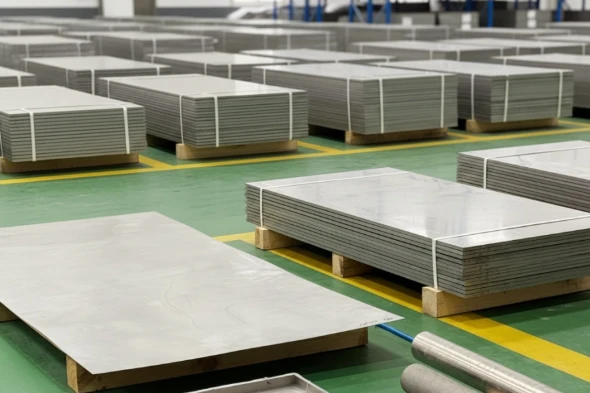
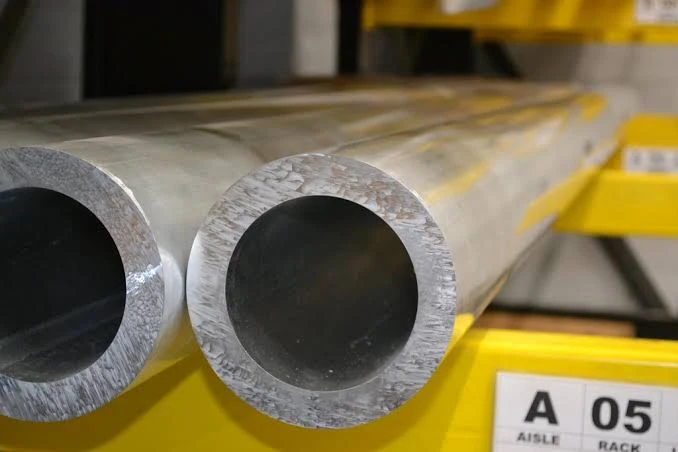
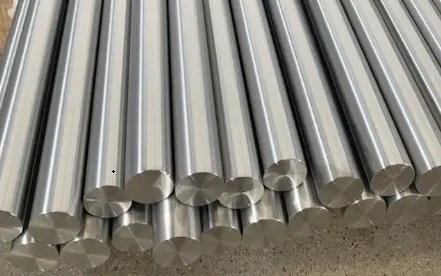
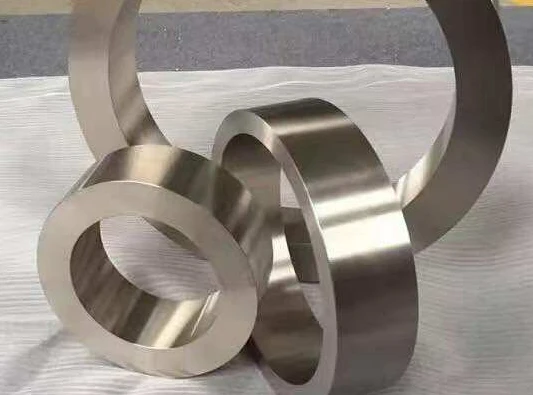
Standard Specification by Inconel 617 Product Form
| Product Form | Applicable Standard | Typical Size Range |
|---|---|---|
| Inconel 617 Bar / Rod | ASTM B572, AMS 5596 | Dia 10mm – 350mm |
| Inconel 617 Plate / Sheet | ASTM B582, AMS 5871 | Thickness 0.8mm – 120mm |
| Inconel 617 Seamless Tube | ASTM B619, AMS 5597 | OD 6mm – 220mm, WT 1mm – 30mm |
| Inconel 617 Forgings (Ring / Disc / Shaft / Block) | ASTM B564, AMS 5870 | OD up to 1800mm, single piece weight ≤ 8000 kg |
| Inconel 617 Flange | ASTM B564, ASME B16.5 / B16.47 | DN15 – DN1200, Class 150 – 2500 |
Inconel 617 Superalloy Detailed Performance Data
Alloy 617 Chemical Composition
The chemical composition of Alloy 617 (weight %) is shown below. The cobalt and molybdenum contents are the key to its exceptional high-temperature strength:
| Element | Content Range (min – max, %) | Primary Function |
|---|---|---|
| Nickel (Ni) | ≥ 44.5 (typically balance) | Matrix element - provides high-temperature stability, excellent corrosion resistance, and resistance to stress corrosion cracking. |
| Chromium (Cr) | 20.0 – 24.0 | Key element - provides high-temperature oxidation resistance and enhances corrosion resistance in oxidizing media. |
| Cobalt (Co) | 10.0 – 15.0 | Core strengthening element - significantly improves high-temperature strength, creep resistance, and rupture resistance through solid-solution strengthening. |
| Molybdenum (Mo) | 8.0 – 10.0 | Core strengthening element - provides solid-solution strengthening and enhances corrosion resistance in reducing acids and chloride-containing media. |
| Aluminum (Al) | 0.8 – 1.5 | Enhances high-temperature oxidation resistance, especially under cyclic oxidation conditions. |
| Iron (Fe) | ≤ 3.0 | Impurity element, strictly controlled. |
| Carbon (C) | 0.05 – 0.15 | Impurity element, strictly controlled. |
| Manganese (Mn) | ≤ 1.0 | Deoxidizer. |
| Silicon (Si) | ≤ 1.0 | Deoxidizer. |
| Titanium (Ti) | ≤ 0.6 | Stabilizing element. |
| Copper (Cu) | ≤ 0.5 | Impurity element. |
| Boron (B) | ≤ 0.006 | Trace addition to improve grain-boundary properties. |
| Sulfur (S) | ≤ 0.015 | Harmful impurity, strictly controlled. |
| Phosphorus (P) | ≤ 0.02 – 0.03 | Harmful impurity, strictly controlled. |
Alloy 617 Physical Properties
| Property | Typical Value / Range | Unit | Remarks |
|---|---|---|---|
| Density | 8.36 – 8.40 | g/cm³ | Room temperature |
| Melting range | 1330 – 1380 (typically 1332–1377) | °C | - |
| Thermal conductivity (20°C) | 13.4 – 13.9 | W/(m·K) | - |
| Mean coefficient of thermal expansion (20–100°C) | 11.6 – 12.8 | ×10⁻⁶/°C | - |
| Specific heat (20°C) | approx. 420 | J/(kg·K) | - |
| Electrical resistivity (20°C) | 1.22 – 1.25 | µΩ·m | - |
| Elastic modulus (room temperature) | 211 – 212 | GPa | - |
| Magnetic permeability (annealed) | Essentially non-magnetic | ||
Alloy 617 Mechanical Properties
Room-temperature mechanical properties (solution-annealed condition, typical values)
| Property | Typical Value Range (minimum) | Unit |
|---|---|---|
| Tensile strength (Rm) | 680 – 750 (commonly ≥ 680–730) | MPa |
| 0.2% offset yield strength (Rp0.2) | 300 – 350 (commonly ≥ 300–310) | MPa |
| Elongation (A) | 30 – 45% (commonly ≥ 30–35%) | % |
| Hardness | approx. 85 HRB / ≤ 220 HB | - |
High-temperature mechanical properties (short-time tensile)
Alloy 617 retains extremely high strength at elevated temperatures, with a maximum long-term service temperature of approximately 1100°C.
| Temperature (°C) | Tensile Strength (MPa) | 0.2% Yield Strength (MPa) | Elongation (%) |
|---|---|---|---|
| 20 | 734 | 322 | 62 |
| 93 | 706 | 301 | 60 |
| 204 | 647 | 258 | 59 |
| 316 | 628 | 250 | 61 |
| 538 | 595 | 246 | 63 |
| 649 | 570 | 260 | 60 |
| 982 | 496 | 109 | 72 |
High-temperature creep and rupture strength (key performance)
The alloy exhibits exceptionally good creep and rupture resistance at high temperatures - the core advantage behind its use in high-temperature structural components.
| Temperature (°C) | 10,000-hour Rupture Strength (MPa) | Creep Limit (0.0001%/h, MPa) |
|---|---|---|
| 595 | approx. 345 | approx. 345 |
| 649 | approx. 276 | approx. 276 |
| 760 | approx. 121 | approx. 90 |
| 871 | approx. 39 | approx. 28 |
| 982 | approx. 16 | approx. 12 |
| 1093 | approx. 5.5 | approx. 5.5 |
Inconel 617 Superalloy Key Corrosion and High-Temperature Performance
The most prominent characteristic of Alloy 617 is its outstanding all-round performance under extreme heat, complex stress, and corrosive environments.
| Performance Category | Description |
|---|---|
| High-temperature oxidation resistance | Excellent. Stable in oxidizing atmospheres for long-term service at up to 1100°C (2012°F), with short-term exposure capability up to 1150–1250°C. Its high chromium and aluminum contents form a dense, tightly adherent oxide film. |
| Carburization and nitridation resistance | Outstanding. Suitable for carburizing and nitriding atmospheres - an ideal material for heat-treatment furnace internals (such as baskets and muffles). |
| Sulfidation and hot-corrosion resistance | Good. Shows good resistance to sulfidation attack in sulfur-bearing atmospheres at high temperature. |
| Stress corrosion cracking (SCC) resistance | Outstanding. The high nickel content confers natural immunity to chloride stress corrosion cracking (Cl-SCC). |
| General corrosion resistance | Excellent resistance to oxidizing acids (such as nitric acid), reducing acids, alkalis, salt solutions, and seawater. |
| Long-term metallurgical stability | Strong resistance to embrittling-phase precipitation under long-term high-temperature exposure; a stable structure makes it ideal for high-temperature structural applications. |
| Environments to avoid | Corrosion resistance is limited in strongly reducing acids (such as hot concentrated hydrochloric and sulfuric acid). Heating in environments containing low-melting-point metals such as lead, bismuth, sulfur, and phosphorus should be avoided to prevent embrittlement. |
Inconel 617 Superalloy Welding and Heat Treatment
Heat treatment:
Stress-relief annealing - Purpose: relieve residual stresses after cold working or welding. Temperature: up to 870°C (1600°F), followed by slow cooling after holding.
Solution annealing (for optimum properties) - Purpose: dissolve carbides, obtain a uniform austenitic structure, and achieve the best combination of strength, ductility, and corrosion resistance. Temperature: 1150 – 1200°C (2100 – 2190°F), normally held at 1177°C (2150°F). Cooling: water quenching is mandatory (sections thinner than 1.5 mm may be rapidly air-cooled) to obtain maximum creep resistance.
Hot working: Recommended temperature range: 1200 – 950°C (2190 – 1740°F). Because of the alloy's high strength at elevated temperature, high-power equipment is required.
Cold working: The work-hardening rate is higher than that of austenitic stainless steels. Cold working should be performed after annealing, with intermediate annealing required for large reductions. When cold deformation exceeds 10% (or 5% where the service temperature exceeds 900°C), a final solution anneal is required.
Welding:
Weldability: excellent. Suitable processes include GTAW/TIG, GMAW/MIG, SMAW, electron-beam welding, and resistance welding. SAW is not recommended, because its high heat input and slow cooling can lead to cracking.
Filler metal selection: use a matching filler metal such as ERNiCrCoMo-1 wire or a matching covered electrode.
Process control: the material must be in the solution-treated condition before welding, and surfaces must be thoroughly cleaned. Use low heat input and keep the interpass temperature ≤ 150°C. Preheating and post-weld heat treatment are normally not required.
Summary of Alloy 617 Core Material Characteristics
Outstanding high-temperature strength and creep resistance
retains extremely high instantaneous and long-term (creep/rupture) strength at up to 1100°C - ideal for high-temperature structural applications.
Excellent oxidation, carburization, and sulfidation resistance
the high chromium and aluminum contents give outstanding performance in extreme-temperature oxidizing, carburizing, and sulfur-bearing environments.
Comprehensive corrosion resistance
excellent resistance to oxidizing/reducing acids, alkalis, salt solutions, and seawater, with immunity to chloride stress corrosion cracking.
Long-term metallurgical stability
a stable structure with strong resistance to embrittling-phase precipitation under long-term high-temperature exposure.
Good weldability and workability
can be welded by a variety of conventional processes and supports hot and cold working (with attention to work hardening).
Essentially non-magnetic
extremely low magnetic permeability in the annealed condition.
Inconel 617 Application Fields
Alloy 617 is widely used in cutting-edge fields with extreme demands on high-temperature strength, oxidation resistance, and long-term stability:
- Advanced power generation and nuclear energy: intermediate heat exchangers for high-temperature gas-cooled reactors (HTGR), piping for advanced ultra-supercritical (A-USC) coal-fired power plants, gas turbine combustors, transition ducts, and turbine components.
- Aerospace: aero-engine combustor liners, afterburner components, transition ducts, hot-section structural parts.
- Heat treatment and industrial furnaces: radiant tubes, muffles, furnace rolls, baskets and tooling/fixtures, high-temperature brazing trays.
- Petrochemical: steam/hydrocarbon reforming units, catalytic cracking units, catalyst support grids in nitric acid production.
- Others: high-temperature valves and springs, heat exchangers.
GNEE Inconel 617 alloy Manufacturing Capabilities
All Inconel 617 products can be supplied as raw stock or fully machined components. Mill test certificates (EN 10204 3.1 / 3.2) are available upon request.
| Equipment Category | Equipment Type | Corresponding Processing Capacity |
|---|---|---|
| Melting Equipment | VIM + ESR / VAR Furnace | High-purity ingot remelting, strict inclusion control, full heat traceability |
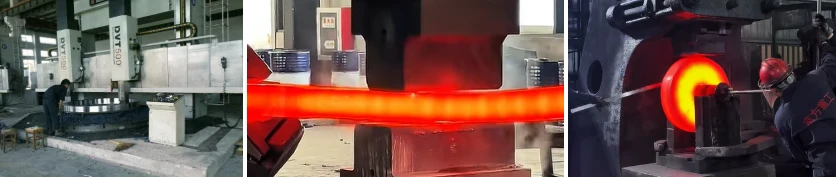
| Forging Equipment | 1600T / 3000T Hydraulic Forging Press, Ring Rolling Mill | Open-die forging, closed-die forging, seamless ring rolling, controlled grain flow |
| Rolling Equipment | Plate Rolling Mill, Bar Peeling & Straightening Line | Hot rolling, cold rolling, surface peeling, straightening, removing surface defects |
| Machining Equipment | 5-axis CNC Lathe, CNC Milling Machine, Deep Hole Drilling Machine | Precision turning, milling, drilling, grooving, custom machined blanks & finished components |
| Heat Treatment Furnace | Atmosphere-controlled Solution Annealing Furnace | Uniform solution heat treatment, precise temperature holding & cooling control |
| Inspection Equipment | UT, PT, Spectrometer, Tensile Testing Machine, Metallographic Microscope | 100% NDT, PMI chemical verification, mechanical test, grain size inspection |
Why Choose GNEE as Your Supplier of Inconel 617 Nickel-Based Alloy?
- Hastelloy Series: Hastelloy C-276, Hastelloy C-22, Hastelloy B-3, Hastelloy C-4. Mainstream materials for highly corrosive operating conditions, widely used in chemical reactors and flue gas desulfurization (FGD) units.
- Inconel Nickel-Based Superalloys: Inconel 718, Inconel 625, Inconel 600, Inconel 690. Stable high-temperature strength, suitable for aerospace structural components, gas turbines, and nuclear power heat exchange equipment.
- Incoloy Iron-Nickel-Based Corrosion-Resistant Alloys: Incoloy 800H, Incoloy 800HT, Incoloy 825, Incoloy 926. Combining high-temperature oxidation resistance with resistance to acid and alkali media corrosion.
- Cast Nickel-Based Superalloys: Inconel 713C, Inconel 713LC. Excellent high-temperature creep and oxidation resistance, commonly used in gas turbines and turbocharger turbine castings.
- Monel Alloys: Monel 400, Monel K-500. Resistant to seawater corrosion, making them common materials for marine equipment, valves, and pipe fittings.
- Super Austenitic Stainless Steels: 254SMO, 904L, 654SMO. Outstanding resistance to pitting and crevice corrosion, suitable for seawater desalination and chloride-containing highly corrosive chemical environments.
- Duplex Stainless Steels: 2205, 2507, S32760. High strength with excellent resistance to chloride stress corrosion cracking.
- Precipitation-Hardening Stainless Steels: 17-4PH, 15-5PH, 17-7PH. High strength levels, used for precision structural components, pumps, valves, and fasteners.
Contact us now to get the latest pricing for Inconel 617 superalloy.
FAQ:
Q1: Are Alloy 617, Inconel 617, and UNS N06617 the same material?
A1: Yes - they generally refer to the same material (UNS N06617). Inconel® 617 is a registered trademark of Special Metals Corporation.
Q2: What is its maximum recommended service temperature?
A2: Based on its oxidation resistance and high-temperature strength, the maximum temperature for long-term continuous service in air or oxidizing atmospheres is 1100°C (2012°F), with short-term exposure up to 1150–1250°C (2100–2280°F).
Q3: What are the main differences from Inconel 625 and 718?
A3: Alloy 617: solid-solution strengthened, focused on strength, oxidation resistance, and long-term stability at extreme temperatures (> 980°C). Inconel 625: primarily solid-solution strengthened, focused on excellent general corrosion resistance (especially pitting and crevice corrosion) with moderate high-temperature capability. Inconel 718: precipitation-hardened, focused on ultra-high strength, fatigue, and creep performance from room temperature to about 650°C - the principal material for aero-engine discs.
Q4: Why is its creep resistance so outstanding?
A4: Its high cobalt (10–15%) and molybdenum (8–10%) contents, through the solid-solution strengthening mechanism, greatly increase lattice resistance and effectively suppress dislocation motion and diffusion creep at high temperature, thereby providing exceptional creep and rupture resistance.
Q5: Is heat treatment required after welding?
A5: Normally no. However, for thick-section weldments used under extremely severe conditions, a stress-relief anneal may be recommended. Post-weld solution treatment is usually unnecessary and may degrade properties due to grain growth.
Q6: What international standards does it have?
A6: Common standards include: UNS N06617, W.Nr. 2.4663 / 2.4663a, ASTM B166 (bar), ASTM B168 (plate/strip), ASTM B167/B829 (seamless pipe & tube), ASTM B564 (forgings), ASME SB-166/SB-168, AMS 5887, EN 10095, and others.