Unlike steel, nickel alloys retain an austenitic (face-centered cubic) structure from near absolute zero up to their melting point, with no allotropic transformation. Heat treatment logic is therefore fundamentally different: the goal is not quench hardening, but recrystallization annealing, solution treating, and precipitation (aging) strengthening. Based on the framework of the ASM Specialty Handbook: Nickel, Cobalt and Their Alloys, this guide reviews the six principal heat treatment types for nickel alloys and provides verified process parameters and mechanical property data for Inconel 625, Inconel 718, Inconel 601, Monel 400, Hastelloy C-276, Incoloy 800 and Incoloy 825. All parameters must be confirmed against the governing material specification and drawing requirements.
Phases and Precipitates in Nickel Alloys: The Metallurgical Basis
The matrix of nickel alloys is the γ phase, an FCC solid solution of Ni, Co, Cr, Mo and W. Five categories of strengthening phases and precipitates determine heat treatment outcomes:
| Phase / Precipitate | Composition | Metallurgical Function |
|---|---|---|
| γ' phase | Ni₃Al / Ni₃Ti | Primary strengthening phase; sustains high-temperature strength and oxidation resistance up to 800°C |
| γ'' phase | Ni₃Nb (forms in Fe-bearing systems) | Disc-shaped strengthening precipitate; the main strengthening source in Inconel 718 |
| Carbides | M₂₃C₆, M₇C₃, M₆C | Pin grain boundaries and improve creep resistance |
| Boron/zirconium compounds | M₃B₂ | Refine grain-boundary carbide morphology; improve ductility and creep resistance |
| Detrimental phases | χ, δ, Laves | Lath or needle-like; reduce high-temperature strength and ductility (δ in Alloy 625, μ in C-276) |
The objective of heat treatment is to control the arrangement of γ matrix and γ' / γ'' precipitates while producing beneficial secondary carbides. Improper treatment forms continuous grain-boundary carbide layers or excess TCP phases, severely damaging impact toughness and overall mechanical performance.
The Six Principal Heat Treatment Types
| Type | Purpose | Typical Temperature | Key Notes |
|---|---|---|---|
| 1. Softening / recrystallization annealing | Remove cold work; soften and recrystallize | 700–1200°C | Cold reduction ≥20% recommended (critical zone ~10%); avoid excessive temperature to prevent grain coarsening |
| 2. Solution annealing | Dissolve carbides; produce coarse grains for creep resistance | 1150–1300°C | Rapid cooling (e.g. water quench) prevents carbide reprecipitation |
| 3. Stress relieving | Remove cold-working stresses without recrystallization | 400–600°C | Retains cold-worked strength while relieving residual stress |
| 4. Stress equalizing / stabilization | Low-temperature stress relief; stabilize dimensions | 200–350°C | Maintains cold-worked strength; used for precision parts |
| 5. Solution treating (pre-aging) | Dissolve strengthening elements to prepare for aging | 900–1200°C | Critical for creep resistance above 600°C; cooling rate depends on grade |
| 6. Aging / precipitation hardening | Precipitate γ', γ'' and carbides | 425–900°C, several hours | Key step for high strength and creep resistance in superalloys |
Source: ASM Specialty Handbook: Nickel, Cobalt and Their Alloys. For reference only, subject to final technical confirmation.
Heat Treatment Examples and Data for Typical Grades
Inconel 601 (UNS N06601): Softening Annealing of Cold-Drawn Wire
For 4.67 mm cold-drawn wire with 45% cold reduction, annealing temperature changes mechanical properties as follows. The pattern is clear: the heavier the cold reduction, the lower the recrystallization temperature; higher annealing temperature lowers strength and raises ductility.
| Annealing Temperature | Tensile Strength (MPa) | Yield Strength (MPa) | Elongation (%) |
|---|---|---|---|
| As drawn (no anneal) | 1200 | 1145 | 5 |
| 950°C | 786 | 390 | 32 |
| 1070°C | 717 | 296 | 39 |
| 1150°C | 638 | 225 | 44 |
Measured data, cold-drawn wire ø4.67 mm, 45% cold reduction. For reference only, subject to final technical confirmation. Per ASTM B168 annealed condition: tensile ≥650 MPa, yield ≥300 MPa, elongation ≥30%.
Nickel 201 (UNS N02201): Mechanical Properties by Heat Treatment Condition
| Condition | Process | Yield (MPa) | Tensile (MPa) | Elongation (%) | Hardness HBW |
|---|---|---|---|---|---|
| Soft annealed | 815–925°C, 5 min, any cooling | >80 | >340 | >40 | <130 |
| Stress relieved | 480–705°C, 30–120 min, air cool | >150 | >430 | >15 | 150 |
| Stabilized | 260–480°C, 1–2 h, air cool | >430 | >540 | - | 180 |
Per DIN 17750:2021. For reference only, subject to final technical confirmation. Elongation of the stabilized condition varies with temperature and holding time and must be measured per batch.
Inconel 706 (UNS N09706): Two Aging Routes
The strength of Inconel 706 comes almost entirely from solution treatment plus aging. Within the same "solution → age" framework, whether an 845°C stabilization step is inserted determines whether the property target is creep resistance or maximum strength:
| Route | Process Detail | Yield (MPa) | Tensile (MPa) | Elongation (%) | Target |
|---|---|---|---|---|---|
| Route A (creep-optimized) |
Solution 925–1010°C air cool → stabilize 845°C×3h air cool → age 720°C×8h furnace cool to 620°C×8h air cool | 1024 | 1282 | 22 | Best creep resistance |
| Route B (strength-optimized) |
Solution 925–1010°C air cool → age 720°C×8h furnace cool to 620°C×8h air cool | 1112 | 1334 | 24 | Best strength |
Solution-treated (unaged) reference values: yield 383 MPa, tensile 757 MPa, elongation 47%. For reference only, subject to final technical confirmation.
Inconel 625 (UNS N06625): Grade 1 vs Grade 2 Annealing Practices
Inconel 625 is a solid-solution strengthened Ni-Cr-Mo-Nb alloy supplied in two grades per ASTM B443 / B444, and the heat treatment defines the property target: Grade 1, annealed at 940–1040°C, delivers higher strength with good ductility; Grade 2, solution annealed at 1090–1200°C, has coarser grains and superior creep resistance at and above 600°C.
| Grade / Treatment | Process | Tensile (MPa) | Yield (MPa) | Elongation (%) | Service |
|---|---|---|---|---|---|
| Grade 1 (annealed) | 940–1040°C, air or water cool | ≥827 | ≥414 | ≥30 | ≤600°C, corrosion service |
| Grade 2 (solution annealed) | 1090–1200°C, rapid cool | ≥760 | ≥345 | ≥30 | ≥600°C, creep service |
Per ASTM B443 / B444. For reference only, subject to final technical confirmation. Where post-weld corrosion resistance must be restored, re-solution anneal above 980°C.

Inconel 718 (UNS N07718): Solution Treatment + Double Aging
Inconel 718 is the most widely produced nickel superalloy, strengthened by γ'' (Ni₃Nb) and γ' precipitates. The standard cycle is solution treatment at 940–980°C followed by double aging: 720°C×8h, furnace cooled at ≤55°C/h to 620°C, held 8h, then air cooled. The furnace-cooling rate is the critical control point for complete γ'' precipitation:
| Step | Parameters | Control Points |
|---|---|---|
| 1. Solution treatment | 940–980°C, air cool (water quench for thin sections) | Dissolve γ'' precursors and carbides; too high coarsens grains, too low leaves incomplete solutioning |
| 2. First aging | 720°C×8h, furnace cool at ≤55°C/h to 620°C | Slow cooling through the precipitation range ensures uniform γ'' precipitation |
| 3. Second aging | 620°C×8h, air cool | Supplementary precipitation; stabilizes microstructure and properties |
Aged mechanical properties (ASTM B637 / AMS 5662): tensile ≥1275 MPa, yield (0.2%) ≥1034 MPa, elongation ≥12%, hardness ≥36 HRC. For reference only, subject to final technical confirmation.
Monel 400 (UNS N04400): A Single-Phase Alloy - Anneal Only, No Aging
Monel 400 is a single-phase nickel-copper solid solution with no age-hardenable precipitates; its heat treatment options are limited to annealing and stress relieving. Strength can only be raised by cold work - a fundamental difference from precipitation-hardening alloys such as 718 and 706:
| Condition | Process | Notes |
|---|---|---|
| Annealing | 700–980°C (commonly 870–980°C), short soak, air cool | Fully softens cold-worked structure; lower temperatures require longer soaks and attention to grain growth |
| Stress relieving | 260–480°C (commonly ~540°C×1–2h, adjusted to stress level) | Relieves residual stress from forming; strongly recommended before service in stress-corrosion-sensitive media |
Annealed mechanical properties (ASTM B127 / B164): tensile ≥450 MPa, yield ≥170 MPa, elongation ≥30% (plate and strip). For reference only, subject to final technical confirmation.
⚠ Selection note: Monel 400 cannot be hardened by heat treatment. For an age-hardenable nickel-copper alloy, specify Monel K-500 (UNS N05500), which precipitates Ni₃(Al,Ti) on aging.
Hastelloy C-276 (UNS N10276): Solution Anneal + Rapid Cooling Through the Precipitation Range
C-276 is a solid-solution strengthened Ni-Mo-Cr-W alloy with a single thermal route: solution annealing at 1120–1175°C followed by rapid cooling. Holding between 550–980°C precipitates μ phase and M₂₃C₆, degrading corrosion resistance (especially intergranular). The cooling rate after solution treatment matters more than the temperature itself: thin sheet may be air cooled, while heavy sections and forgings should be water quenched.
| Process | Parameters | Critical Control Points |
|---|---|---|
| Solution annealing | 1120–1175°C, rapid cool (water quench or forced air) | Fully dissolve secondary phases; minimize cooling time from furnace temperature to below 550°C |
| Sensitization range | 550–980°C | Avoid extended exposure; weld HAZs fall in this range - re-solution anneal after welding for critical service |
Solution-annealed mechanical properties (ASTM B575 / B574): tensile ≥690 MPa, yield ≥285 MPa, elongation ≥40%. For reference only, subject to final technical confirmation.
Incoloy 800 / 800H / 800HT (UNS N08800/08810/08811): One Chemistry, Three Grades Defined by Heat Treatment
These three grades share the same base chemistry (Ni 30–35%, Cr 19–23%, Fe balance). What actually separates them is the carbon lower limit, total Al+Ti, and the annealing temperature - a textbook case of grades defined by heat treatment practice:
| Grade | Annealing Temperature | Microstructure | Service |
|---|---|---|---|
| Incoloy 800 (N08800) | 980–1040°C anneal | Fine grain; no carbon lower limit | ≤600°C general corrosion and heating equipment |
| Incoloy 800H (N08810) | 1120–1170°C solution anneal | C 0.05–0.10%; grain size ≥ASTM 5 (coarse) | 600–900°C ethylene crackers, reformers, heat exchangers |
| Incoloy 800HT (N08811) | 1120–1170°C solution anneal | Al+Ti total 0.85–1.20%; in-service γ' precipitation | ≥900°C long-term creep service |
Mechanical properties (ASTM B409 / B407, annealed or solution annealed): 800 - tensile ≥450 MPa, yield ≥170 MPa, elongation ≥30%. 800H / 800HT show slightly lower room-temperature strength due to coarse grains but higher stress-rupture and creep capability. For reference only, subject to final technical confirmation.
Incoloy 825 (UNS N08825): Stabilizing Anneal at 920–980°C
Incoloy 825 is a Ni-Fe-Cr alloy with Mo, Cu and titanium-stabilized carbon. Its heat treatment is a 920–980°C anneal followed by air cooling. Because carbon is fixed as TiC, the alloy is not sensitization-sensitive and generally does not require re-solution annealing after welding - a notable process difference from C-276:
| Process | Parameters | Notes |
|---|---|---|
| Annealing (softening / stabilizing) | 920–980°C, air cool | Removes cold work and restores ductility and corrosion resistance; too low leaves incomplete recrystallization, too high coarsens grains |
Annealed mechanical properties (ASTM B424 / B423): tensile ≥586 MPa, yield ≥240 MPa, elongation ≥30%. For reference only, subject to final technical confirmation.
Annealing Methods and Furnace Types Compared
| Method | Characteristics | Typical Use | Example |
|---|---|---|---|
| Batch annealing | Furnace loaded and held for hours; simple operation | Coils, turbine blades | Inconel 600: 925–980°C, 1–3h, air cool |
| Continuous annealing | Work passes through furnace; high temperature, short time; requires protective atmosphere | Strip and foil | Inconel 600: 1100–1175°C, 30–60 min |
| Vacuum furnace annealing | Low pressure with small hydrogen addition; oxidation controlled | Precision small parts | - |
| Salt bath annealing | Fast, uniform heating in molten salt; ≤700°C; pickling required | Complex shapes | - |
| Fluidized bed annealing | Alumina powder + pressurized hot gas; salt-bath benefits without pickling | Various parts | Bed pressure on the order of 140 kPa |
| Flame annealing (oil / acetylene) | Local treatment of large parts only; oxidation and uneven heating | Large components | Cracking risk; assess case by case |
For reference only, subject to final technical confirmation.
The Core Control Point: Preventing Sulfur Contamination
Nickel is extremely sensitive to sulfur. Sulfur causes embrittlement and sulfide stress corrosion cracking, and the damage is irreversible - contaminated parts must be ground back or scrapped. Three requirements apply throughout heat treatment:
Fuel: use sulfur-free fuels (methane, ethane, propane, butane). Avoid coal, oil or biomass gas; sulfur content must be controlled within 2.3–3.4 g per 10 m³ to be acceptable.
Furnace atmosphere: must be sulfur-free to prevent SO₂ and H₂S formation.
Surface contamination: remove all oils, greases and sulfur-bearing residues before charging.
Why Choose GNEE as Your Supplier Partner?
Stock availability: pipe, plate, bar and forgings of Inconel 625 / 718 / 601, Monel 400, Hastelloy C-276 and Incoloy 800 / 800H / 825 from our warehouses, in annealed or solution-annealed condition as required.
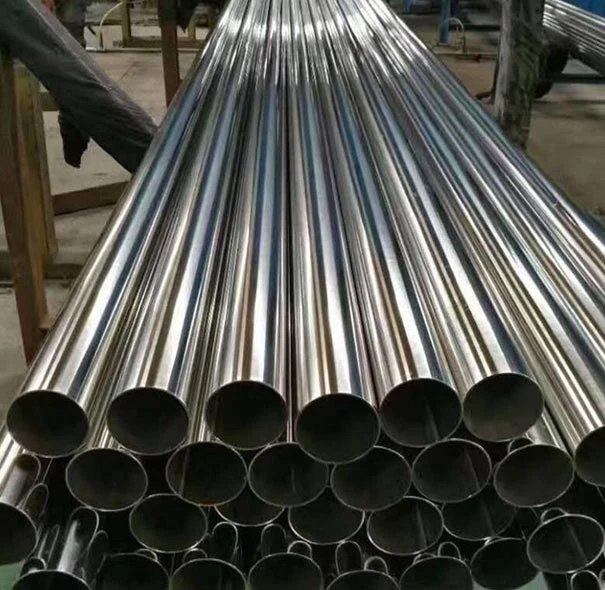
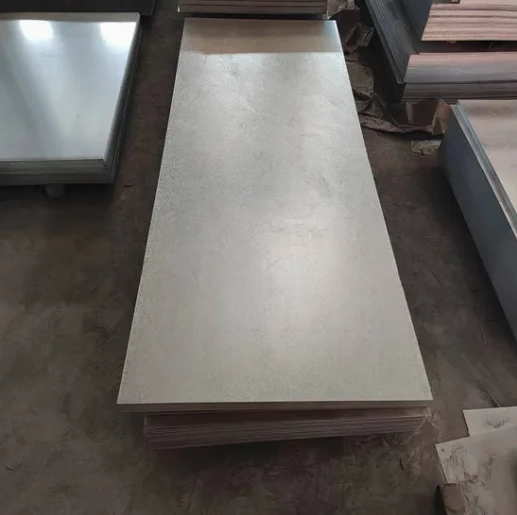


Full NDT capability: UT, ET, PMI and hardness testing per applicable ASTM E-series standards.

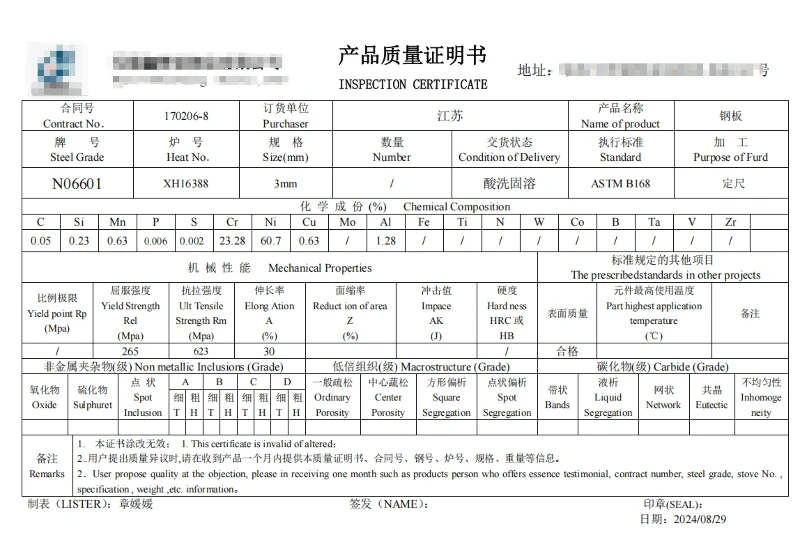
Material certification: EN 10204 3.1 / 3.2 MTC; supply to NACE MR0175 / ISO 15156 requirements.
Custom processing: cutting, beveling, cold forming, solution and aging heat treatment, weld overlay.

Export packaging: VCI anti-rust paper, wooden pallets, steel strapping for sea, air and land transport.

24-hour technical support: metallurgical engineers to verify heat treatment condition and acceptance clauses.
GNEE Nickel-Based Alloy Supplier
Hastelloy Series: Hastelloy C-276, Hastelloy C-22, Hastelloy B-3, Hastelloy C-4. Mainstream materials for highly corrosive operating conditions, widely used in chemical reactors and flue gas desulfurization (FGD) units.
Inconel Nickel-Based Superalloys: Inconel 718, Inconel 625, Inconel 600, Inconel 690. Stable high-temperature strength, suitable for aerospace structural components, gas turbines, and nuclear power heat exchange equipment.
Incoloy Iron-Nickel-Based Corrosion-Resistant Alloys: Incoloy 800H, Incoloy 800HT, Incoloy 825, Incoloy 926. Combining high-temperature oxidation resistance with resistance to acid and alkali media corrosion.
Cast Nickel-Based Superalloys: Inconel 713C, Inconel 713LC. Excellent high-temperature creep and oxidation resistance, commonly used in gas turbines and turbocharger turbine castings.
Monel Alloys: Monel 400, Monel K-500. Resistant to seawater corrosion, making them common materials for marine equipment, valves, and pipe fittings.
Super Austenitic Stainless Steels: 254SMO, 904L, 654SMO. Outstanding resistance to pitting and crevice corrosion, suitable for seawater desalination and chloride-containing highly corrosive chemical environments.
Duplex Stainless Steels: 2205, 2507, S32760. High strength with excellent resistance to chloride stress corrosion cracking.
Precipitation-Hardening Stainless Steels: 17-4PH, 15-5PH, 17-7PH. High strength levels, used for precision structural components, pumps, valves, and fasteners.
FAQ: Nickel Alloy Heat Treatment
Q1: Why can't nickel alloys be hardened by quenching like steel?
Nickel alloys remain FCC austenitic from cryogenic temperatures to the melting point, with no allotropic transformation, so quenching produces no martensite. Solid-solution alloys (625, C-276, Monel 400) gain strength only from cold work or the solution condition itself; precipitation-hardening alloys (718, 706, X-750) rely on aging to precipitate γ' / γ'' phases.
Q2: How do I choose between Inconel 625 Grade 1 and Grade 2?
For service at or below 600°C where corrosion resistance and strength dominate, specify Grade 1 (annealed 940–1040°C, tensile ≥827 MPa). For service at or above 600°C requiring creep resistance, specify Grade 2 (solution annealed 1090–1200°C; coarser grains give higher stress-rupture strength). The grade must be stated in the purchase specification.
Q3: What is the most common cause of low strength after Inconel 718 aging?
In most cases the double-aging control is off: the furnace cooling rate after 720°C×8h exceeds 55°C/h, leaving incomplete γ'' (Ni₃Nb) precipitation, or the solution temperature was too low for full solutioning. Excessive delay between solution treatment and aging beyond the allowed window also weakens the aging response.
Q4: Why must oils and greases be removed before annealing?
Sulfur-bearing residues decompose in the furnace and react with nickel at high temperature to form the low-melting Ni-Ni₃S₂ eutectic (~645°C), which penetrates grain boundaries and embrittles the part. The damage is irreversible: the contaminated layer must be ground off or the part scrapped.
Q5: Does Incoloy 825 need re-solution annealing after welding?
Generally no. 825 is titanium-stabilized with carbon fixed as TiC and is not sensitization-sensitive after welding; conformity of the solution-annealed delivery condition or local stress relief is normally sufficient. C-276, by contrast, has its weld HAZ within the 550–980°C precipitation range, so re-solution annealing after welding is required for critical applications.
Q6: Why must 800H be supplied in the coarse-grain condition?
The creep strength of 800H comes from high-temperature carbides pinning grain boundaries: coarser grains mean shorter total grain-boundary length and lower creep rates. The standard therefore requires 1120–1170°C solution annealing to a grain size of ASTM 5 or coarser, with a mandatory carbon lower limit of 0.05%. Fine-grain Incoloy 800 loses creep strength in long-term service above 600°C.